Antoni and Julianna Sparzak Rykoski – The Early Years (1914 – 1919)
The marriage and subsequent lives of Antoni and Julianna Rykoski span many of the most significant events in recent history including World War I, the Great Depression and World War II. Their lives also span a period during which America underwent a dramatic transition from old world to modern norms, mores and customs. In many respects, their story is representative of many early-to-mid Twentieth Century first generation American families.
Antoni was born on October 26, 1886 in Chorzele, Mazowieckie, Poland. In Poland his father had a pottery business. His birth certificate, written in Polish includes when and where he was born and the names of his parents: Antoni Rykoski and Mary Anna Kieke Rykoski. He had three brothers: Walter, Stanley and Thomas. His brother Walter passed away in America of yellow jaundice, Thomas died in war in Poland and Stanley, who was a shoemaker and made beautiful shoes, also died in war in Poland. Antoni came to America in 1905 at age 19 and lived in New York for 3 years before moving to Maryland.
Antoni worked primarily as a stevedore, like many Polish immigrants. At some point he also worked in a foundry. It is likely that Julia met Antoni through her father or brothers who were also stevedores. Since Julia arrived in America when she was three years old she was fluent in both English and Polish, but Antoni only spoke Polish. He never learned English and he could not read or write. Julia recounted that Antoni would sometimes sit with a newspaper pretending to read, but doing so just “for show” since he could not read.
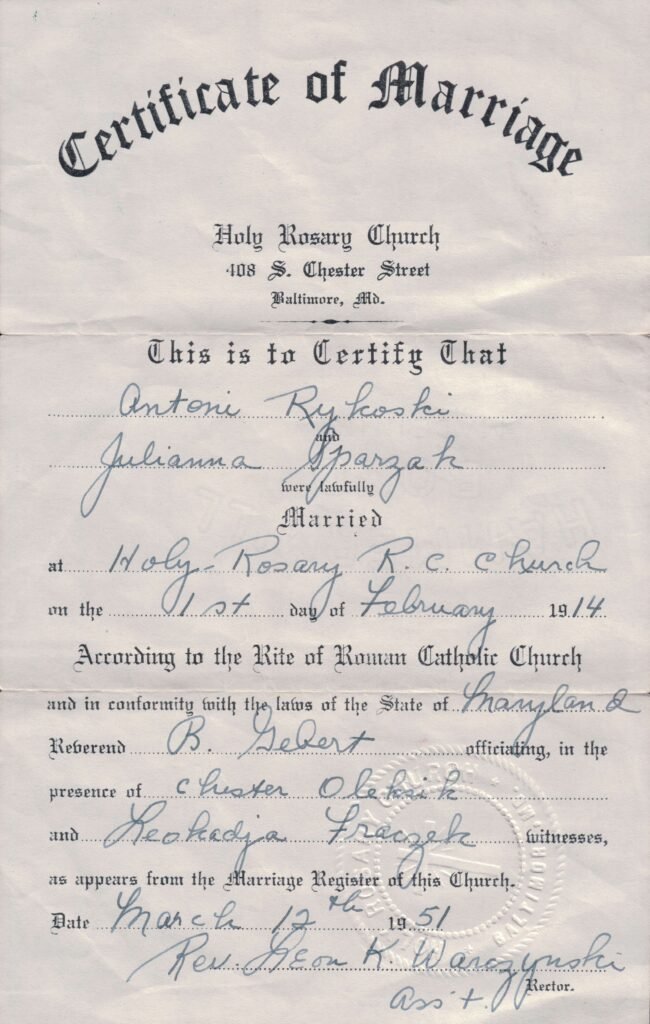
Julia married Antoni Stanislaus Rykoski Jr. on February 1, 1914 at Holy Rosary Catholic Church. According to their marriage certificate, the maid of honor was named Leonadja Fraczek and the best man was Chester Oleksik. Years later Julia would honor Leonadja by naming her youngest daughter after her. Despite extensive genealogical research no record of Leonadja or the Fraczek family could be located in Baltimore in the 1910 or later timeframe so we will likely never know more details about Julia and Leonadja’s friendship.
Direct Ancestors
1 Departing Poland (late 1800s)
2 Locust Point, Md. (1600s to 1900s)
3 Sparzak Family (1890s-1900s)
4 Rykoski Family (1910s-1980s)
–Life as a Baltimore Longshoreman
–WW II Memories of Locust Point
5 Stanley & Sophie Waskiewicz Family
— –Lollie, Carolyn & Tony Waskiewicz
6 Charlie & Teenie Rykoski Bernady
8 Anna ‘Annie’ Laura Rykoski Coulborn ALLEN
9 Anthony Jr. & Marjorie Rykoski

Antoni Rykoski Birth Certificate (1886)
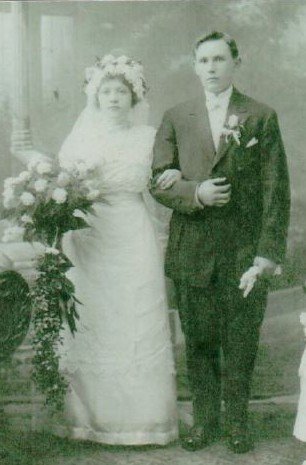
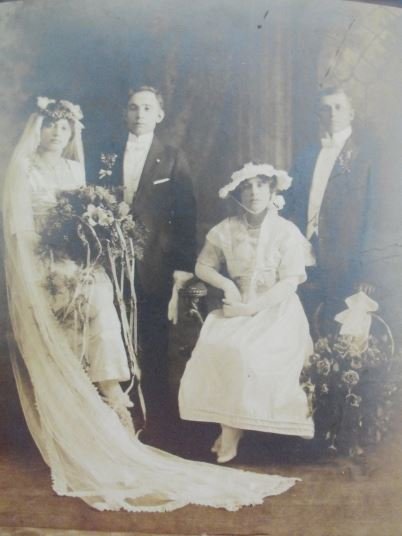

Antoni and Julianna Wedding Photos Feb 1, 1914
Note that Antoni and Julia appear to be the bride and groom in both photographs, but they were clearly taken at different times. The clothing, people and scenery are different. There is no known explanation for the existence of the two photographs. Perhaps they performed the ceremony twice in different locations for reasons known only to those who were alive at the time.
Working as a stevedore, Antoni earned very little. In 1926 a stevedore earned $6.80 per day, so in the 1914 timeframe Antoni likely earned considerably less. Although the early Rykoski finances are unknown, Antoni and Julia saved a sufficient amount, possibly with assistance from Julia’s Sparzak relatives, to purchase their home at 1440 Reynolds Street. During this timeframe living expenses were far different than they are today: rent or mortgage payment, food, energy (typically coal, kerosene or natural gas), and incidentals.
At the turn of the century moral values were still very much “old world;” marriage was for life and divorce rarely occurred; the male worked and the female bore and raised children and carried out domestic responsibilities. Families used public transportation if they had a need to travel. There were few conveniences such as those we are accustomed to today: no telephones, radios, televisions, air conditioners, refrigerators, clothes washers or dryers, or dish washers. Shopping was done almost daily since there was no refrigeration unless the family could afford to purchase ice for their “ice box.” Clothes were washed by hand and hung outside or in the basement on clothes lines. Water was heated on a stove which was likely powered by natural gas, wood or coal.
This was the world into which Antoni and Julia’s children were born. Sophia, the oldest was born on October 27, 1914 at the beginning of World War I when Julianna was just 18 years old. Annette Josethine “Teenie” was born on June 11, 1916, less than two years after Sophie and while World War I was raging in Europe. Her “nickname” was the same as her Aunt Teenie Sparzak Wisniewski (Antoinette “Teenie” Sparzak Wisniewski) who was 13 years old when Annette Josethine was born. Melvin Stanley was born on March 9, 1918 when Sophie was almost four years old and Teenie was almost two years old. Antoni and Julia would parent a total of six children over a ten year period and raise them in a tiny rowhouse located at 1440 Reynolds Street in Locust Point in Baltimore, Maryland.
It is likely that as a result of World War I Antoni was able to work many hours at the Locust Point port loading and unloading supplies and munitions to support the War effort. However, with a growing family, Antoni and Julia likely could afford few luxuries. Antoni was drafted into the U.S. Army during World War I but was given a deferment because he had two small children. The War ended in November 1918, but its effect reached well into the next decade, ushering in a period of prosperity known as the “Roaring 20s,” as the period from 1920 to 1929 became known.
THE ROARING 20’S (1920 – 1929)
The “Roaring 20s” was a boom time in America. Teenagers had no problem finding a job and education often ended early as a result. The decade began with passage of the 19th Amendment to the U.S. Constitution in 1920 giving women the right to vote. A generational gap began to form between the “new” women of the 1920s and the previous generation. Since women had filled many traditionally male occupations during the War many believed that they were capable of having both a career and a family.
Young women’s perspectives regarding work, relationships, marriage, and child rearing were undergoing slow but steady change as they began to perceive a new sense of personal freedom and liberation. This shift was evident in music, dance and fashion as young people were drawn to jazz music, danced the Charleston, and adopted “flapper” fashions.
Prohibition also played a significant role in the 1920s. It made illegal the manufacture, import and sale of beer, wine and hard liquor. This movement gave rise to illegal alcohol establishments known as “Speakeasies,” and led to the rise of alcohol smuggling and organized crime.
Certainly the many cultural and social changes influenced the Rykoski children to some extent. Even though there was no form of mass media other than newspapers and magazines, contemporary events were likely discussed at school, at home, and among the neighborhood children. However, these events likely had little impact on Antoni and Julia other than their trying to counter what they perceived as negative influences by instilling their more traditional values on their children in the midst of strong societal forces of change.
U.S. Census information is a useful resource for describing a “point in time” perspective of where the family is living, the names and ages of family members and their occupations. The Rykoskis first appear in the 1920 U.S. Census, which makes sense since they were not married in 1910. They are also listed in the 1930 and 1940 U.S. Census (the 1950 Census will not be released until April 1, 2022). According to the U.S. Census taken on January 19th, 1920, Antoni and Julianna were married, resided at 1440 Reynolds Street, and had three children at the time the Census was taken. Antoni’s occupation is listed as steamship stevedore.
The children’s names were recorded as Sophia, Annette (listed in the Census as Christina probably because they referred to her as “Teenie” which the Census-taker probably misunderstood as “Tina”), and Melvin. Julia’s parents, John and Amelia, were residing at 1357 Reynolds Street (where the grain elevators are now located). Julia’s older brother John Jr. and his wife Eleanor lived at 1453 Hull Street, a few blocks away. Julia’s Uncle Joseph and Aunt Mary lived across the street at 1429 Reynolds Street. Uncle Walter and Aunt Mary Rykoski lived at 1403 Reynolds Street.
The three youngest Rykoski children were born in the first half of the 1920s. Anna Laura, known as “Annie,” was born on June 9, 1920 when her sisters were 6 and 4 years old and her brother Melvin was two years old. Anthony, born on April 6, 1922, followed the pattern of a new child every two years. He was the fifth child and second son of the family. Leonarda Amelia, known as “Lee” was the baby of the family, born on November 6, 1924. She was likely named after one of Julia’s friends, Leonadja Fraczek who was Julia’s maid of honor according to her marriage certificate.
By the end of 1924 a family of two adults and six children ranging in age from newborn to ten years old lived at 1440 Reynolds Street. For the rest of the 1920s and into the early 1930s all eight family members lived together. They spoke Polish in the home, living in close quarters and experiencing life as a close-knit family.
Life at 1440 Reynolds Street was both warm and hectic. For many years the house was alive with the many children, frequent visits by the many relatives who lived on Reynolds Street, and celebrations at the holidays and for other special events. Family members recall that events at the house involved traditional Polish food and lots of laughing and talking. To appreciate the living conditions and what life was like on special occasions it is useful to more fully understand the home’s layout and features.
The house was 870 total square feet in size and only 12-feet wide, extremely small by today’s living space standards. It was located on a narrow Locust Point Street. The house was entered via a front stoop which in the mid-1940s consisted of two small steps. During visits the grandchildren would often play on the front steps, the girls playing jacks with their sisters and cousins or playing tag and other games. Locust Point gave the grandchildren who lived in other parts of the city the sense that they were ‘in the country’ or visiting a “village” because of the trees, quiet streets, and nearby parks.
The front steps led directly into the formal living room. There were no hallways given how narrow the house was, just one room leading to another: living room, dining room, kitchen, back yard. The front room on the first floor was the living room or parlor which contained a sofa and chairs but was generally not a space where family gathered. It was walked through to get to the dining room and kitchen which were considered the “living” spaces. A chimney bump-out which provided a flue for venting wood-burning or coal-burning stove fumes from the basement to the chimney on top of the house was located on the right-hand side of the parlor. The parlor had a mounted mirror and portraits of Julia’s grandparents.
The dining room was entered by passing from the living room under the stairs, walking over a heating grate located in the floor. There was a cabinet or hutch on the right wall which probably held linens and things. Next to that, in the corner, were the stairs to the second floor. To the left was a round table, used on Christmas Eve and probably other big occasions. Otherwise, it was covered with ‘stuff’ such as mail, newspapers, etc. On the opposite wall, to the right and near the kitchen was the rocking chair and smoke stand used by Antoni whenever he was at home.

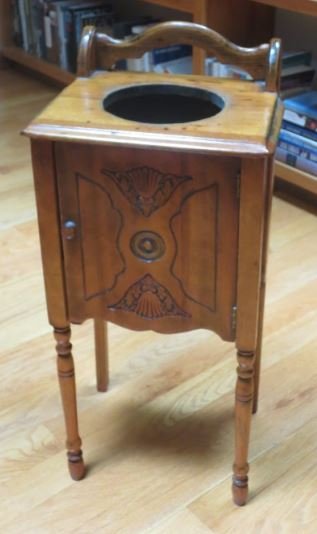

Antoni’s Smoking Stand
There was no real doorway between the dining room and the kitchen, just a wide pass-through area. Juliana was most often found in the kitchen. The kitchen was the social center of the house, always buzzing with activity, conversation, arguments and laughter. Frequently, Julia cooked while everything else was going on.
The second floor was reached by the staircase which was located between the parlor and the dining room. The steps were entered from the dining room. They were narrow and the first few steps faced the parlor but then a sharp right turn was necessary to traverse the remaining steps to the second floor. Sometimes the children would play on the stairs, especially if the weather prevented them from going out of doors. At the top of the stairs there was also a heating grate in the floor which was designed to allow heat from the first floor to reach the second. It was the only second floor heat source during the long, cold Baltimore winters. Grandchildren often would eavesdrop on adult conversations by listening through the second floor heat grate.
The second floor consisted of a front bedroom, back bedroom, and after indoor plumbing was installed, a small bathroom. Antoni and Julianna slept in the front bedroom. The back bedroom and bathroom were reached by turning right at the top of the steps toward the back of the house. All six children slept in the back bedroom during the mid-1920s and early 1930s, but by the mid-1940s five of the six had left home and Lee was the sole occupant of the back bedroom. The back bedroom was bright, neat and clean. After Lee married it was used as a guest room. One walked through this room to reach the bathroom.
The small backyard could be reached by exiting through the kitchen door. It had clothes lines and an “outhouse” located at the end of the yard, as was the case with many early 20th Century Baltimore row houses. Eventually indoor plumbing was added and the outhouse was removed. Often the children would congregate in the yard to stay out of the way of the grownups in the tiny house. The yard had a very small cemented area and was fenced in to protect it from the alley traffic and provide privacy.
There was also a basement reached by a small door located beneath the previously described staircase. The basement had a dirt floor, a coal bin located at the front near the street, a coal chute that was used for coal deliveries and was eventually converted into a front basement window, and a coal furnace.
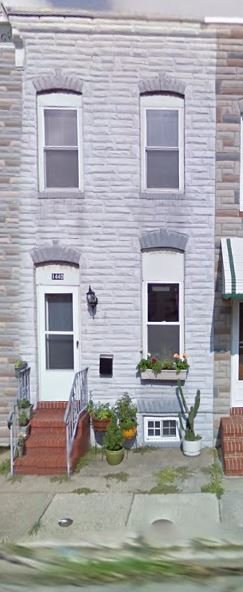
1440 Reynolds Street: Note that this is a contemporary photo. The front is done in a style known as “formstone” which was popular in the 1960s and not representative of the probable brick facade that existed when the Rykoski children lived here.
Children could play at nearby Latrobe Park which was located just across Fort Avenue or periodically make the slightly longer trip to nearby Fort McHenry, offering them ample opportunity to play outdoors when weather permitted. There were also many Sparzak relatives living on the same block of Reynolds Street and the children often played with their many cousins and spent time in the homes of their aunts and uncles.
Christmas and Easter were very memorable holidays. The home would be decorated and Julia and her parents, sisters and cousins would make many traditional Polish dishes. Families would visit and the little rowhouses would be alive with talking and eating and drinking and other things that large families do on these important Catholic holidays. One tradition was to bake a lamb-shaped cake and a large variety of cookies and make them available on the table at Easter and Christmas.
Julia’s youngest sister, Felicia “Evelyn” Sparzak was born on December 29, 1914, only two months after Julia’s oldest daughter Sophia was born. Given their close proximity in age, Sophia, Evelyn and Teenie grew up spending time, playing and socializing together.
The girls attended Holy Rosary because it was a Polish parish, despite the commuting distance. In fact, the Locust Point-based Our Lady of Good Counsel parish did not permit Polish children to attend at that time. This policy apparently was changed at some point since the younger children attended Our Lady of Good Counsel Catholic School. The three girls attended school at a time when the prevailing view was that girls did not need more than an eighth-grade education so their formal education ended when they graduated from Holy Rosary’s eighth grade.

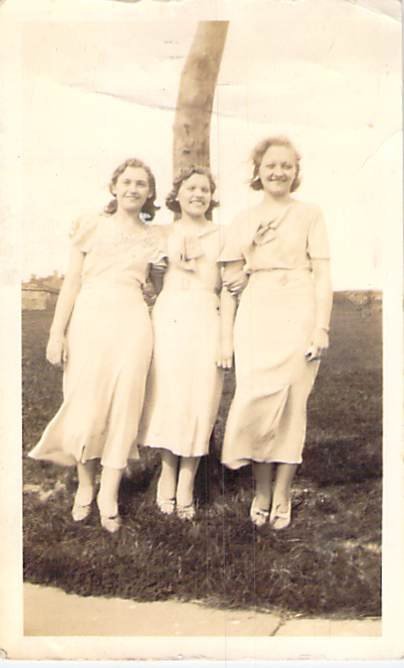
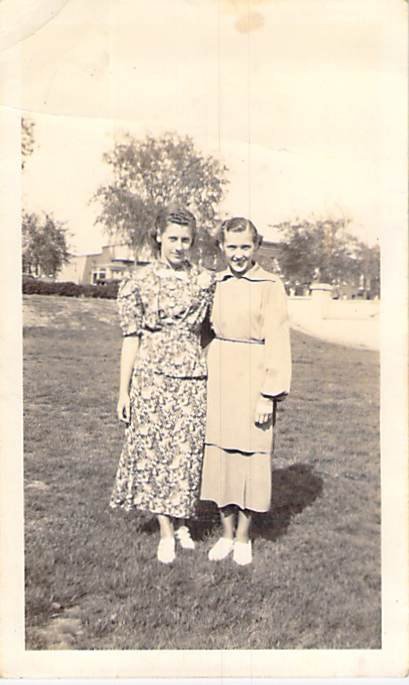
On left: Sophie, Teenie & Evelyn (Sparzak) … On right: Teenie, Sophie & Evelyn (Sparzak)
For the Rykoski children the 1920s probably represented the happiest and most carefree years of their young lives. Although they would continue to come together at holidays and on special occasions, the 1930s represented a decade of change both in terms of world events and each of their personal situations and circumstances.
THE GREAT DEPRESSION YEARS (1930s)
As if the Rykoskis were not sufficiently challenged trying to raise a family in the 1920s, the following decade was ushered in with a “bang” – the U.S. Stock Market Crash of 1929 which threw the nation into a decade long “Great Depression.” For many families, jobs were simply non-existent and they faced prolonged deprivation and poverty. Some survived by begging and others were forced to move in with relatives or take in boarders to make ends meet.
Many who lived through this time period were psychologically scared for the remainder of their lives. They were obsessed with hard work, earning as much as possible, saving, frugality, and never wasting anything. As they became parents, they instilled these values in their children.
There are no living family members who can recount the impact of the Great Depression on the Rykoski family. It is possible that Antoni experienced periods of unemployment from his stevedore duties and that he and Julia may have had to rely on support from the many Sparzak families living in the neighborhood. What we do know is that the family continued to live at 1440 Reynolds Street and that as the children reached adolescence the rapid transition from childhood to adulthood began to take hold as one child after another left home during the 1930s.
According to the U.S. Census taken on April 12th, 1930 Antoni and Julia still lived at 1440 Reynolds Street. By this time the family had expanded to six children with the addition of Anna, Anthony and Leonarda. Based on this Census we know that all six children lived at home and shared one second floor bedroom. Antoni was still a stevedore and longshoreman. Julia’s parents, both in their 60s, had moved to 1422 Reynolds Street. Julia’s brother, John Jr. and Eleanor lived at 1453 Hull Street, Uncle Joseph and Aunt Mary, in their mid-to-late 50s lived at 1429 Reynolds Street, and Julia’s cousin Joseph and his wife Constance resided at 1411 Reynolds Street.
Antoni, Julia and the six children continued living together as a family through the worst of the “Great Depression” into the mid-1930s. The family faced its first serious jolt when Julia’s mother, Emelia passed away in 1935 at age 61. Given the closeness of the family and the universal love expressed by everyone toward Emelia, her passing likely had a profound effect on the Sparzak families living in Locust Point and on the Rykoski parents and children.
Only two short years later Julia lost her father Jan at the age of 63. He was laid to rest with Emelia in the Holy Rosary Cemetery in East Baltimore. His passing represented the end of an era in which the family transplanted itself from Russian-occupied Poland to the Locust Point Community in America. Because of Jan and Emelia’s decisions and actions future generations would be American born. They would certainly be less directly connected to the motherland, likely would no longer speak the Polish language, and be less able to fully identify with their Polish heritage, but they would grow up in a different land and world – one with abundant opportunity to earn a good living, excel at endeavors of their own choosing, and live a higher quality of life than would otherwise have been possible.
Because of the Great Depression President Roosevelt enacted a series of “New Deal” reforms during the 1930s in an effort to tackle the most pressing social issues. Initiatives included banking reform, securities regulation, repeal of prohibition, and enactment of the Social Security Act of 1935 to provide for the general welfare by establishing a system of Federal old-age benefits. He also pushed a series of public works programs, created a jobs program named the Civilian Conservation Corps, and implemented a number of farm and rural programs. Julia’s Social Security Card, dated July 7, 1939 is show below.

As the Rykoski children matured during the early 1930s it was inevitable that the family would evolve as the oldest children left home to start their own families. Julia’s youngest sister Evelyn who was close childhood friends with Sophia and Teenie was married by late 1933 or early 1934 and gave birth to her first son in September 1934. Sophia was the first of the Rykoskis to leave, moving to Philadelphia in the mid-1930s. By the end of 1938 she would be married to Stanley Alexander “Jimmy” Waskiewicz and mother to her first child, Leonarda Amelia “Lollie” Waskiewicz.
She was soon followed by her sister Teenie who married Charles Bernady, also in 1938. Melvin joined the U.S. Naval Reserves in 1937 and alternated time between training and deployments and living at home. The three remaining children continued living at home for most of the 1930s and leading up to the extraordinary events associated with World War II in the 1940s.
WORLD WAR II (1940s)
Most of the descendants who contributed to this family history were either very young or not born during World War II, but its history has been a significant part of their lives never-the-less. Their parents lived through the 1940s, vividly recall those incidents, and passed down their recollections. Even one-generation removed, family members can easily discuss the events leading up to and during WW II. More than a decade after the war ended, elementary school children were required to participate in air raid drills by moving into hallways when an air-raid siren sounded, sitting on the floor and covering their necks with their hands in order to avoid injury from breaking glass.
When the current generation visits Pearl Harbor in Hawaii, which was attacked on December 7, 1941, they do so with great respect and reverence, remembering the extraordinary loss of life and the damage inflicted on the U.S. Navy’s Pacific Fleet. They recall with horror the depictions of the German concentration camps, the Nazi efforts to exterminate the entire Jewish population, the unimaginable loss of life as U.S. forces attempted to displace Japanese soldiers from well-defended Pacific islands, and the necessity to drop atomic bombs on two Japanese cities with a threat to drop a third on Tokyo in order to convince the Japanese government to capitulate and end the war.
The Rykoski family was greatly affected by the world events of the 1940s. All of the children except Lee had left home. Melvin and Anthony are still listed as living at home on the April 9, 1940 U.S. Census, but both had already joined the Navy and it was only a matter of time before they would be aboard ship and supporting the war effort.
The Census also reported that Antoni at age 54 was still working as a stevedore. Julia’s parents were not in this Census since both had passed. Unfortunately, it appears that the Census-takers completely skipped the odd-numbered side of Reynolds Street so there is no way to know if Uncle Joseph and Aunt Mary still lived there, although likely they did as some family members remember visiting them in the 1940s. There is also no way to know if cousins Joseph and Constance still resided at 1411 Reynolds Street. According to the Census, another cousin, Alexander, his wife Cynthia and their children lived at 1434 Reynolds Street.
World War II propelled the country out of the Great Depression, creating an industrial and logistics and transportation revolution that would change the world forever. Baltimore was the home to Bethlehem Steel, shipyards, and Martin-Marietta which produced fighter aircraft during the War. Steel, ships, aircraft, munitions, food and many other supplies had to be moved from the U.S. to the battlefronts in Europe and Asia. Many of these goods shipped out of the Port of Baltimore. Antoni and the Sparzak relatives likely loaded goods onto ships bound for the “front” throughout the war years.
Melvin and little brother Anthony both served on active duty in the Navy during World War II. Melvin was a machinist’s mate and Anthony was a yeoman (someone who performed administrative tasks). Starting in 1940, Melvin served on patrol boat named USS Eagle 56 (PE-56) which was based out of Portland, Maine and was responsible for patrolling the New England coast to protect it from German submarine incursions.
On April 23, 1945 the USS Eagle 56 sank off the coast of Maine. There were only 13 survivors from the crew of 67. The Navy initially labeled the cause of the sinking as a boiler explosion. According to the ship’s “muster roll” on that date, Melvin is listed as a survivor. It also lists the names and status of his shipmates who were killed that day. In 2001 the U.S. Navy reclassified the cause of the sinking as a German submarine attack and awarded purple hearts to the survivors and to the families of those who were killed that day. The following information recounts the USS Eagle 56 history:
The USS Eagle 56 was built by Ford Motor Corporation and launched in August 1919. It was 200 feet long, 33 feet wide and displaced 615 long tons. It had a maximum speed of 21 miles per hour and was staffed by five officers and 56 enlisted men. Eagle 56 was one of 60 Eagle-class patrol boats built by Henry Ford late in World War I as submarine chasers, none of which saw action. Unpopular due to their poor sea handling, only eight remained in service when WW II started.
From January through August 1942 Eagle 56 patrolled off Delaware. This timeframe was known as the “Second Shooting Season” to the Germans because their submarine commanders relentlessly attacked merchant shipping and U.S. naval vessels along the North American east coast. U.S. defense measures were weak and disorganized and the U-boats were able to inflict massive damage with little risk. During this period, Axis submarines sank 609 ships totaling 3.1 million tons and the loss of thousands of lives, mainly those of merchant mariners, against a loss of only 22 U-boats, accounting for roughly one quarter of all shipping sunk by U-boats during the war.
Melvin and Eagle 56 remained constantly at sea during this period. When her depth charges were expended, a small ship from Cape May, New Jersey would bring out a new supply. Eagle 56 rescued survivors of Jacob Jones off Cape May in February, 1942. Eagle 56 was damaged by collision with the submerged wreck of Gypsum Prince while rescuing survivors from the British freighter which had collided with a British tanker on March 4th at the entrance to Delaware Bay. Eagle 56 was repaired using parts from another Eagle boat, and then assigned to the Key West sonar school in May 1942.
Eagle 56 was assigned to Naval Air Station, Brunswick, Maine commencing June 28, 1944. At noon on 23 April 1945, Eagle 56 exploded amidships, and broke into two pieces three miles off of Cape Elizabeth, Maine. The destroyer Selfridge was operating near Eagle 56 and arrived 30 minutes after the explosion to rescue 13 survivors from the crew of 62. It has obtained a sharp, well-defined sonar contact during the rescue and dropped nine depth charges without obvious result. According to a classified Navy report, U-853 had been operating in the waters off Maine. Five of the 13 survivors claimed to have seen a submarine with insignia consistent with those of U-853. Eagle 56 ’s boiler was overhauled just two weeks before the sinking, and none of the boilers on the other 59 Eagle Boats had failed. Nevertheless, the official Navy inquiry concluded that Eagle 56 had suffered a boiler explosion. In 2001, the Eagle 56 case was reviewed and reclassified as a combat loss. In June 2001, purple hearts were awarded to three survivors and the next of kin of those killed. Melvin Rykoski has not received a purple as of October 10, 2015 even though he was a survivor.
Melvin’s experiences suggest the level of intensity and disruption that World War II inflicted on the American people. Julia often talked about the incident when Eagle 52 was damaged in March in 1942 the more significant event when Eagle 56 was sunk in April, 1945. Certainly, the War effort impacted the other children who had left home and married. Son in laws including Austin Litsinger Coulbourne also served in the Navy during World War II, forcing the families they left behind to deal with the situation back home.
After forty six years in the United States, Julia decided to become a naturalized U.S. Citizen and did so on November 8, 1943. With the end of the War in 1945 the family returned to some semblance of pre-war normalcy. However, for the Rykoski family things would never be quite the same. Melvin remained in the Navy until 1953.

Lee continued living with Antoni and Julia throughout the war years. Some of Julia’s grandchildren who would visit in the late 1940s recalled visiting for the holidays and shared their memories of Lee before she married and moved away.
Those of us cousins who were older were allowed to sit on the floor while waiting for the Christmas Eve meal (Wigilia). Aunt Lee would join us, making us feel more grown up than we were. We never felt she was ‘babysitting’ or possibly was there because her mother told her to keep us amused. Aunt Lee was a fascination because she was young, laughed a lot, was ‘dating’, and seemed more like an older sister or cousin than an aunt. To me, “Aunts” were old and married people. Lee was different.
The person that Lee was dating was Frederick “Bud” Meyer. They married on September 17, 1949. A video of that wedding is available on YouTube.
The grandchildren also had other memories from their visits. Carolyn Waskiewicz Harriger recounted:
Dziadek reigned from his seat in the dining room. I remember arguments between him and his daughters. He terrified me – not because he was ever mean, but because of his intimidating demeanor. This little guy was BIG to me. The only time I remember seeing him smile was at Lee and Bud’s wedding.
As he reigned, in the early years he also played his “squeeze box” – a handheld concertina accordion. Oh that was great and I think maybe my love for music and music making began here. I would just sit on the stairs and listen.
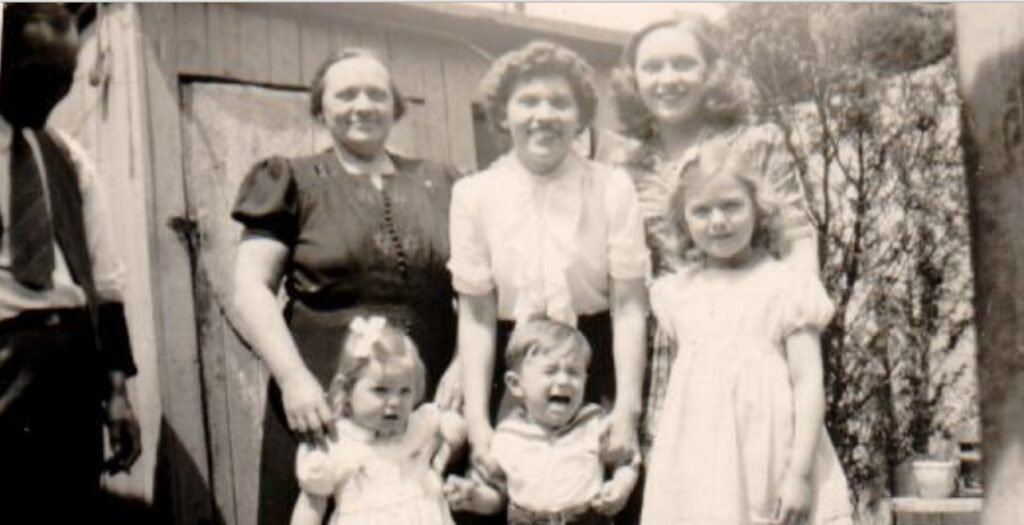
Adults: Antoni, Julia, Sophie, & Lee;
Children: Helen Ann Coulbourn (age 2), Karel Bernady (age 2), & Lollie (age 6)
Abt. 1943. Note the 1440 Reynolds Street “outhouse” in background
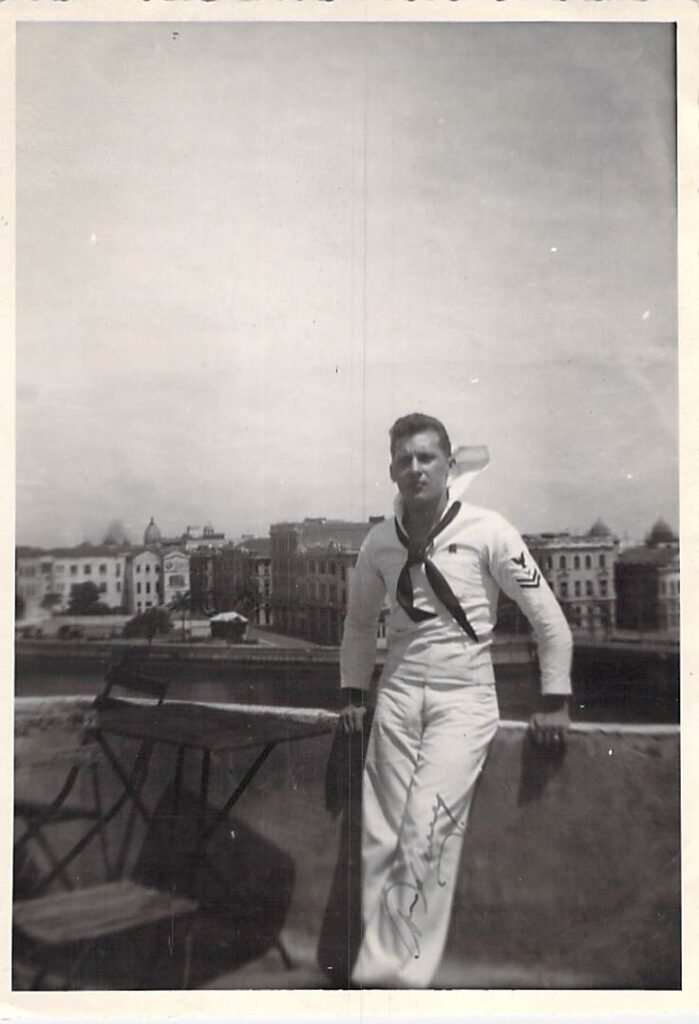
Although most grandchildren were either not born in the 1940s or have little memory of those years, the oldest recall their early visits during the holidays. The grandchildren were taught to refer to Julia as Babcia and Antoni as Dziadek. The holiday was special if Uncle Melvin showed up in his Navy uniform, entertaining his nieces and nephews with antics and teasing. Grandmother didn’t seem to know if or when he would make it home and when he did, she seemed that all was right with the world. Of course, he joined in the beer consuming festivities.
On occasion, Antoni felt that it was time to visit the local corner tavern with his sons and sons-in-law, who felt obliged to participate out of respect. Some recount the glare in Julia’s eyes, but that did not seem to deter them from heading to the tavern. “I remember their returning one time after Julie’s “curfew” and in exceptionally good moods. There was lots of ice coming from the women-folk and that may have ended, or at least toned down, that tradition.”
As the Rykoski children matured during the early 1930s it was inevitable that the family would evolve as the oldest children left home to start their own families. Julia’s youngest sister Evelyn who was close childhood friends with Sophia and Teenie was married by late 1933 or early 1934 and gave birth to her first son in September 1934. Sophia was the first of the Rykoskis to leave, moving to Philadelphia in the mid-1930s. By the end of 1938 she would be married to Stanley Alexander “Jimmy” Waskiewicz and mother to her first child, Leonarda Amelia “Lollie” Waskiewicz.
She was soon followed by her sister Teenie who married Charles Bernady, also in 1938. Melvin joined the U.S. Naval Reserves in 1937 and alternated time between training and deployments and living at home. The three remaining children continued living at home for most of the 1930s and leading up to the extraordinary events associated with World War II in the 1940s.
WORLD WAR II (1940s)
Most of the descendants who contributed to this family history were either very young or not born during World War II, but its history has been a significant part of their lives never-the-less. Their parents lived through the 1940s, vividly recall those incidents, and passed down their recollections. Even one-generation removed, family members can easily discuss the events leading up to and during WW II. More than a decade after the war ended, elementary school children were required to participate in air raid drills by moving into hallways when an air-raid siren sounded, sitting on the floor and covering their necks with their hands in order to avoid injury from breaking glass.
When the current generation visits Pearl Harbor in Hawaii, which was attacked on December 7, 1941, they do so with great respect and reverence, remembering the extraordinary loss of life and the damage inflicted on the U.S. Navy’s Pacific Fleet. They recall with horror the depictions of the German concentration camps, the Nazi efforts to exterminate the entire Jewish population, the unimaginable loss of life as U.S. forces attempted to displace Japanese soldiers from well-defended Pacific islands, and the necessity to drop atomic bombs on two Japanese cities with a threat to drop a third on Tokyo in order to convince the Japanese government to capitulate and end the war.
The Rykoski family was greatly affected by the world events of the 1940s. All of the children except Lee had left home. Melvin and Anthony are still listed as living at home on the April 9, 1940 U.S. Census, but both had already joined the Navy and it was only a matter of time before they would be aboard ship and supporting the war effort.
The Census also reported that Antoni at age 54 was still working as a stevedore. Julia’s parents were not in this Census since both had passed. Unfortunately, it appears that the Census-takers completely skipped the odd-numbered side of Reynolds Street so there is no way to know if Uncle Joseph and Aunt Mary still lived there, although likely they did as some family members remember visiting them in the 1940s. There is also no way to know if cousins Joseph and Constance still resided at 1411 Reynolds Street. According to the Census, another cousin, Alexander, his wife Cynthia and their children lived at 1434 Reynolds Street.
World War II propelled the country out of the Great Depression, creating an industrial and logistics and transportation revolution that would change the world forever. Baltimore was the home to Bethlehem Steel, shipyards, and Martin-Marietta which produced fighter aircraft during the War. Steel, ships, aircraft, munitions, food and many other supplies had to be moved from the U.S. to the battlefronts in Europe and Asia. Many of these goods shipped out of the Port of Baltimore. Antoni and the Sparzak relatives likely loaded goods onto ships bound for the “front” throughout the war years.
Melvin and little brother Anthony both served on active duty in the Navy during World War II. Melvin was a machinist’s mate and Anthony was a yeoman (someone who performed administrative tasks). Starting in 1940, Melvin served on patrol boat named USS Eagle 56 (PE-56) which was based out of Portland, Maine and was responsible for patrolling the New England coast to protect it from German submarine incursions.
On April 23, 1945 the USS Eagle 56 sank off the coast of Maine. There were only 13 survivors from the crew of 67. The Navy initially labeled the cause of the sinking as a boiler explosion. According to the ship’s “muster roll” on that date, Melvin is listed as a survivor. It also lists the names and status of his shipmates who were killed that day. In 2001 the U.S. Navy reclassified the cause of the sinking as a German submarine attack and awarded purple hearts to the survivors and to the families of those who were killed that day. The following information recounts the USS Eagle 56 history:
The USS Eagle 56 was built by Ford Motor Corporation and launched in August 1919. It was 200 feet long, 33 feet wide and displaced 615 long tons. It had a maximum speed of 21 miles per hour and was staffed by five officers and 56 enlisted men. Eagle 56 was one of 60 Eagle-class patrol boats built by Henry Ford late in World War I as submarine chasers, none of which saw action. Unpopular due to their poor sea handling, only eight remained in service when WW II started.
From January through August 1942 Eagle 56 patrolled off Delaware. This timeframe was known as the “Second Shooting Season” to the Germans because their submarine commanders relentlessly attacked merchant shipping and U.S. naval vessels along the North American east coast. U.S. defense measures were weak and disorganized and the U-boats were able to inflict massive damage with little risk. During this period, Axis submarines sank 609 ships totaling 3.1 million tons and the loss of thousands of lives, mainly those of merchant mariners, against a loss of only 22 U-boats, accounting for roughly one quarter of all shipping sunk by U-boats during the war.
Melvin and Eagle 56 remained constantly at sea during this period. When her depth charges were expended, a small ship from Cape May, New Jersey would bring out a new supply. Eagle 56 rescued survivors of Jacob Jones off Cape May in February, 1942. Eagle 56 was damaged by collision with the submerged wreck of Gypsum Prince while rescuing survivors from the British freighter which had collided with a British tanker on March 4th at the entrance to Delaware Bay. Eagle 56 was repaired using parts from another Eagle boat, and then assigned to the Key West sonar school in May 1942.
Eagle 56 was assigned to Naval Air Station, Brunswick, Maine commencing June 28, 1944. At noon on 23 April 1945, Eagle 56 exploded amidships, and broke into two pieces three miles off of Cape Elizabeth, Maine. The destroyer Selfridge was operating near Eagle 56 and arrived 30 minutes after the explosion to rescue 13 survivors from the crew of 62. It has obtained a sharp, well-defined sonar contact during the rescue and dropped nine depth charges without obvious result. According to a classified Navy report, U-853 had been operating in the waters off Maine. Five of the 13 survivors claimed to have seen a submarine with insignia consistent with those of U-853. Eagle 56 ’s boiler was overhauled just two weeks before the sinking, and none of the boilers on the other 59 Eagle Boats had failed. Nevertheless, the official Navy inquiry concluded that Eagle 56 had suffered a boiler explosion. In 2001, the Eagle 56 case was reviewed and reclassified as a combat loss. In June 2001, purple hearts were awarded to three survivors and the next of kin of those killed. Melvin Rykoski has not received a purple as of October 10, 2015 even though he was a survivor.
Melvin’s experiences suggest the level of intensity and disruption that World War II inflicted on the American people. Julia often talked about the incident when Eagle 52 was damaged in March in 1942 the more significant event when Eagle 56 was sunk in April, 1945. Certainly, the War effort impacted the other children who had left home and married. Son in laws including Austin Litsinger Coulbourne also served in the Navy during World War II, forcing the families they left behind to deal with the situation back home.
After forty six years in the United States, Julia decided to become a naturalized U.S. Citizen and did so on November 8, 1943. With the end of the War in 1945 the family returned to some semblance of pre-war normalcy. However, for the Rykoski family things would never be quite the same. Melvin remained in the Navy until 1953.
Lee continued living with Antoni and Julia throughout the war years. Some of Julia’s grandchildren who would visit in the late 1940s recalled visiting for the holidays and shared their memories of Lee before she married and moved away.
Those of us cousins who were older were allowed to sit on the floor while waiting for the Christmas Eve meal (Wigilia). Aunt Lee would join us, making us feel more grown up than we were. We never felt she was ‘babysitting’ or possibly was there because her mother told her to keep us amused. Aunt Lee was a fascination because she was young, laughed a lot, was ‘dating’, and seemed more like an older sister or cousin than an aunt. To me, “Aunts” were old and married people. Lee was different.
The person that Lee was dating was Frederick “Bud” Meyer. They married on September 17, 1949. A video of that wedding is available on YouTube.
The grandchildren also had other memories from their visits. Carolyn Waskiewicz Harriger recounted:
Dziadek reigned from his seat in the dining room. I remember arguments between him and his daughters. He terrified me – not because he was ever mean, but because of his intimidating demeanor. This little guy was BIG to me. The only time I remember seeing him smile was at Lee and Bud’s wedding.
As he reigned, in the early years he also played his “squeeze box” – a handheld concertina accordion. Oh that was great and I think maybe my love for music and music making began here. I would just sit on the stairs and listen.
Adults: Antoni, Julia, Sophie, & Lee;
Children: Helen Ann Coulbourn (age 2), Karel Bernady (age 2), & Lollie (age 6)
Abt. 1943. Note the 1440 Reynolds Street “outhouse” in background
Although most grandchildren were either not born in the 1940s or have little memory of those years, the oldest recall their early visits during the holidays. The grandchildren were taught to refer to Julia as Babcia and Antoni as Dziadek. The holiday was special if Uncle Melvin showed up in his Navy uniform, entertaining his nieces and nephews with antics and teasing. Grandmother didn’t seem to know if or when he would make it home and when he did, she seemed that all was right with the world. Of course, he joined in the beer consuming festivities.
On occasion, Antoni felt that it was time to visit the local corner tavern with his sons and sons-in-law, who felt obliged to participate out of respect. Some recount the glare in Julia’s eyes, but that did not seem to deter them from heading to the tavern. “I remember their returning one time after Julie’s “curfew” and in exceptionally good moods. There was lots of ice coming from the women-folk and that may have ended, or at least toned down, that tradition.”
POST-WORLD WAR II (1950s-1980s)
By the 1950s the Rykoskis had come into the modern age. The house had indoor plumbing and electricity. Antoni and Julia likely had a radio and perhaps a telephone. There were no longer any children living at home. They would still visit on holidays and come by at other times to visit.
Holidays and frequent visits were times of joy and laughter and memory-making. Christmas was always a special time. Julie would roll out homemade noodles (kluski) on the kitchen table. The table was covered with a fine, amazingly thin rolled out drape of noodle dough, resembling a table cloth. She rolled it and then cut it appropriately for soup making – without a drop in conversation and participation in whatever was going on.
On Christmas Eve the family would gather in the dining room for the traditional Wigilia meal, full of Polish traditions and legends of that meal now. This meal had great symbolism in terms of what Christmas was all about. After the meal and the cleanup, gifts would be exchanged.
Easter was a special time as well. On the day before Easter the priest would come to the house to bless certain foods: dyed eggs, raisin bread, butter shaped into a lamb, homemade sausage, and possible more. All this food was placed beautifully on the dining table and would become the meal for Easter morning. When the grandkids arrived, they could select an egg and participate in the “egg picking” game. Jellybeans and other goodies were also given to the grandchildren.
Visits would always end with Julia giving a treat to her grandchildren. “I remember that when it was time to go home, Babcia would put something – a biscuit or a piece of fruit – in a brown paper bag and give it to me and my sister. After a few times, I would not leave until I got ‘my bag’; it didn’t matter what kind of treat it contained!”
Antoni continued to work as a stevedore but became ill in 1950. He passed at age 64 on Jan 21, 1951 after a period of illness and was buried at Holy Rosary Cemetery alongside Julia’s Sparzak relatives.
When Dziadek died, the wake was held at the home, as was traditional. A purple wreath of ribbon was posted outside the door to let people know there was a wake in process. The open coffin was located in the living room along the wall between the two great-grandparent pictures, covered with flowers and banked all along the wall. For the young grandchildren the memories of Antoni’s death were vivid:
I remember when Dziadek was very ill he stayed in the upstairs front bedroom which I recall seemed dark and shadowy then. I avoided going to that part of the house. Serious illness and death were not part of my life experience then.
After he died and his coffin was placed in the living room, we were expected to sit in that room for a while before going into the other rooms and joining the people who were eating and talking. It was sad in the living room; not so in the kitchen. At least it didn’t seem that way to me. I was 9 years old and this was my first experience with death. I was terrified. I couldn’t imagine how Babcia and my uncles could sleep in the house while the coffin was in the living room. For a long time afterward, I avoided the living room, stepped through quickly, and could still envision that coffin.
Another grandchild recalled:
I don’t remember much about Grandfather Rykoski. He was stern and did not speak English. I was never afraid; I just had no relationship as I was very young when he died. Mom would tell me that I reminded her of him, like the weird way I would whistle or a certain way I would act. I wish she would have told me more.
Grandfather’s wake (1951) had a huge impact on all of us. I, like many, was afraid to go into the living room for years. I was about 7 and it was my first exposure to death. Even years later when I was older, I still would not go near the wall where the coffin had been.
Antoni and Julia’s children blessed them with a large number of grandchildren between 1937 and 1964:
- Sophia:
- Leonarda Amelia ‘Lollie’ Waskiewicz (Dachille), born on March 3, 1937
- Carolyn Ann Waskiewicz (Harriger), born on April 25, 1941
- Anthony Stanley ‘Tony’ Waskiewicz Sr., born on August 11, 1944
- Teenie:
- Karel Francis Bernady, born on Feb 1, 1941
- Diane Amelia Bernady Lewandowski, born on April 1, 1943
- Annette Maria Anne ‘Nettie’ Bernady, born on November 1, 1951
- Melvin:
- Step-daughter Natalie Patricia ‘Patsy’ Stroh Hockenberry, born on May 15, 1938
- Step-son John W. Stroh, born on October 24, 1944
- Annie:
- Helen Ann Coulbourn Outen, born on January 3, 1941
- Austin Litsinger Coulbourn Jr., born on January 12, 1943
- Mary LaMendola Lowe, born in September, 1958
- Anthony:
- Anthony J. Rykoski, Jr., born about 1950
- Danita Marie Rykoski Metcalf, born about 1954
- Kevin Michael Rykoski, born about 1957
- Lee
- Leonarda Amelia ‘Lee’ Meyer (Marsh), born November 22, 1953
- Frederick William ‘Fred’ Meyer III, born March 21, 1956
- Patricia Ann ‘Tish’ Meyer Kelley Kessler, born on January 12, 1960
- Leslie Ann Meyer, born on June 17, 1964
After Antoni passed in early 1951 Julia continued to live alone at 1440 Reynolds Street. It is difficult to imagine how she managed the transition from having a husband and being an active mother to a world in which she lived alone. Certainly, her children stayed with her for a period of time after Antoni’s death, but eventually everyone had to return to their normal lives and Julia had to confront the reality of being by herself.
Since she did not drive, she would often be driven by her children or grandchildren for visits to their homes in Brooklyn Park or East Baltimore. She would typically bring “Paczki” (doughnuts) in a basket for everyone to eat during her visits. At Christmas she would sometimes give gifts to the grandchildren; some recall receiving two dollars in an envelope. She could also be counted on to keep confidence. On one occasion when a granddaughter was transporting her to their family home the granddaughter had a minor auto accident and pleaded with Julia not to tell her father, which she never did. On another occasion Julia was visiting a daughter and grandchildren and during a game of badminton she backed up, stumbled, and broke her arm. That night she shared a bed with one of the grandchildren and kept hitting her with the cast as she tossed and turned during the night.
The 1950s through the 1980s continued to be a time of close family affiliation and regular visits to Locust Point. Julia’s children and grandchildren would form her social framework for the next several decades. After Antoni’s death Christmas and Easter would often be celebrated at one of the Rykoski children’s homes and Julia would be picked up and spend the day with the family.
The “younger generation” of grandchildren, starting with those born in 1950 and later still have fond memories of visits to 1440 Reynolds Street, even after “Dziadek” passed in 1951. Their parents would take them to visit Julia on weekends and on special occasions such as birthdays.
The Locust Point neighborhood remained the same as was described earlier. It was quiet and secluded because Fort Avenue “dead-ended” at Fort McHenry so except for business traffic into and out of the Port on weekdays, the neighborhood was lightly traveled. The grandchildren were permitted to take walks around the block and if an older child was present, they could cross over Fort Avenue and play at Latrobe Park.
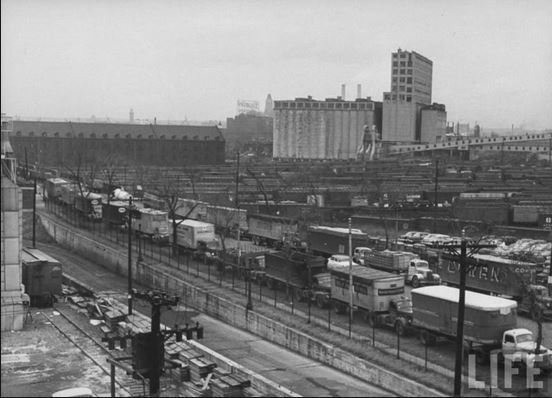
At the eastern end of Reynolds Street, where the 1300 block used to be located, were the B&O Railroad Grain Elevators. They could be seen from a long distance away and were a source of novelty to visiting grandchildren although they were fenced to prevent intrusion. Like most Baltimore neighborhoods there were taverns and saloons scattered throughout the neighborhood.
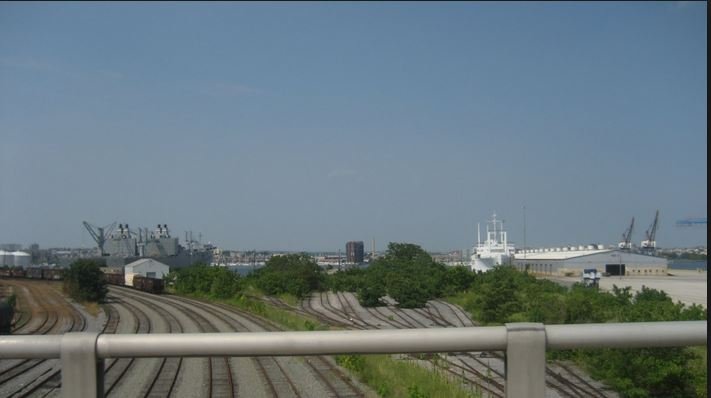
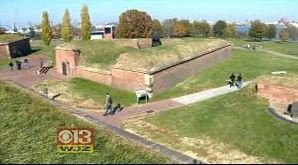
Fort McHenry was a short distance from Reynolds Street, at the end of Fort Avenue. This historic fort and park provided a fertile opportunity for the children to get away from the crowded house on holidays and other special occasions. It was reached by crossing the Fort Avenue bridge which overlooked a vast array of train tracks converging on the B&O port where Antoni worked.
Lee continued living with Antoni and Julia throughout the war years. Some of Julia’s grandchildren who would visit in the late 1940s recalled visiting for the holidays and shared their memories of Lee before she married and moved away.
Those of us cousins who were older were allowed to sit on the floor while waiting for the Christmas Eve meal (Wigilia). Aunt Lee would join us, making us feel more grown up than we were. We never felt she was ‘babysitting’ or possibly was there because her mother told her to keep us amused. Aunt Lee was a fascination because she was young, laughed a lot, was ‘dating’, and seemed more like an older sister or cousin than an aunt. To me, “Aunts” were old and married people. Lee was different.
The person that Lee was dating was Frederick “Bud” Meyer. They married on September 17, 1949. A video of that wedding is available on YouTube.
The grandchildren also had other memories from their visits. Carolyn Waskiewicz Harriger recounted:
Dziadek reigned from his seat in the dining room. I remember arguments between him and his daughters. He terrified me – not because he was ever mean, but because of his intimidating demeanor. This little guy was BIG to me. The only time I remember seeing him smile was at Lee and Bud’s wedding.
As he reigned, in the early years he also played his “squeeze box” – a handheld concertina accordion. Oh that was great and I think maybe my love for music and music making began here. I would just sit on the stairs and listen.
Adults: Antoni, Julia, Sophie, & Lee;
Children: Helen Ann Coulbourn (age 2), Karel Bernady (age 2), & Lollie (age 6)
Abt. 1943. Note the 1440 Reynolds Street “outhouse” in background
Although most grandchildren were either not born in the 1940s or have little memory of those years, the oldest recall their early visits during the holidays. The grandchildren were taught to refer to Julia as Babcia and Antoni as Dziadek. The holiday was special if Uncle Melvin showed up in his Navy uniform, entertaining his nieces and nephews with antics and teasing. Grandmother didn’t seem to know if or when he would make it home and when he did, she seemed that all was right with the world. Of course, he joined in the beer consuming festivities.
On occasion, Antoni felt that it was time to visit the local corner tavern with his sons and sons-in-law, who felt obliged to participate out of respect. Some recount the glare in Julia’s eyes, but that did not seem to deter them from heading to the tavern. “I remember their returning one time after Julie’s “curfew” and in exceptionally good moods. There was lots of ice coming from the women-folk and that may have ended, or at least toned down, that tradition.”

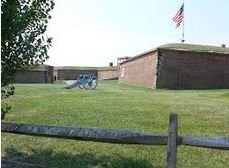
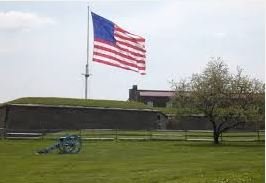
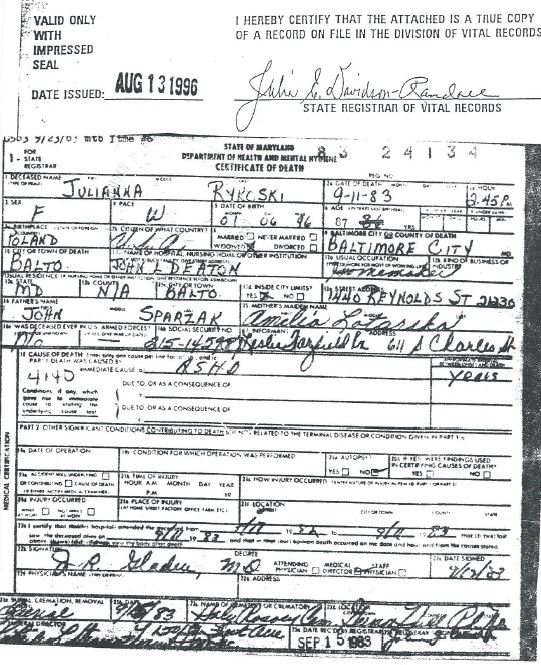
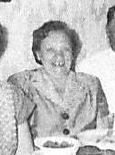
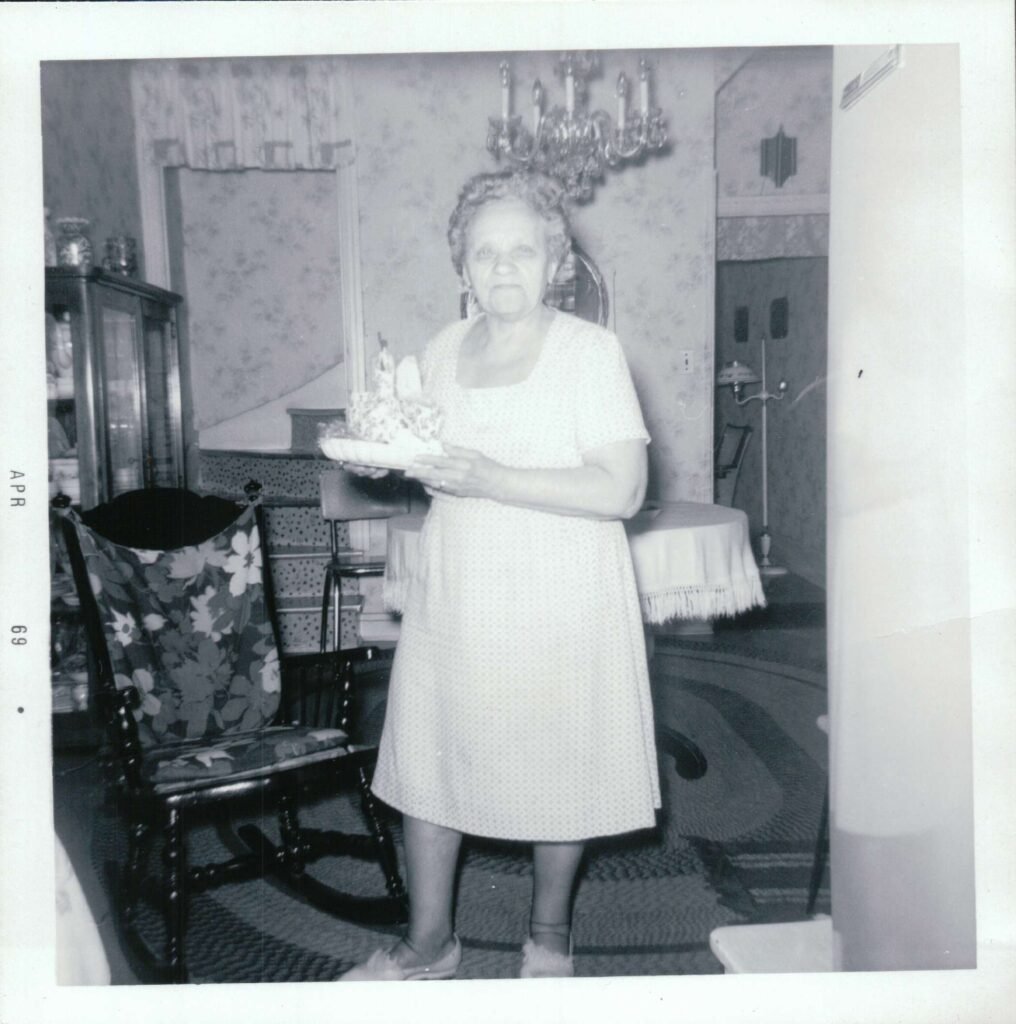
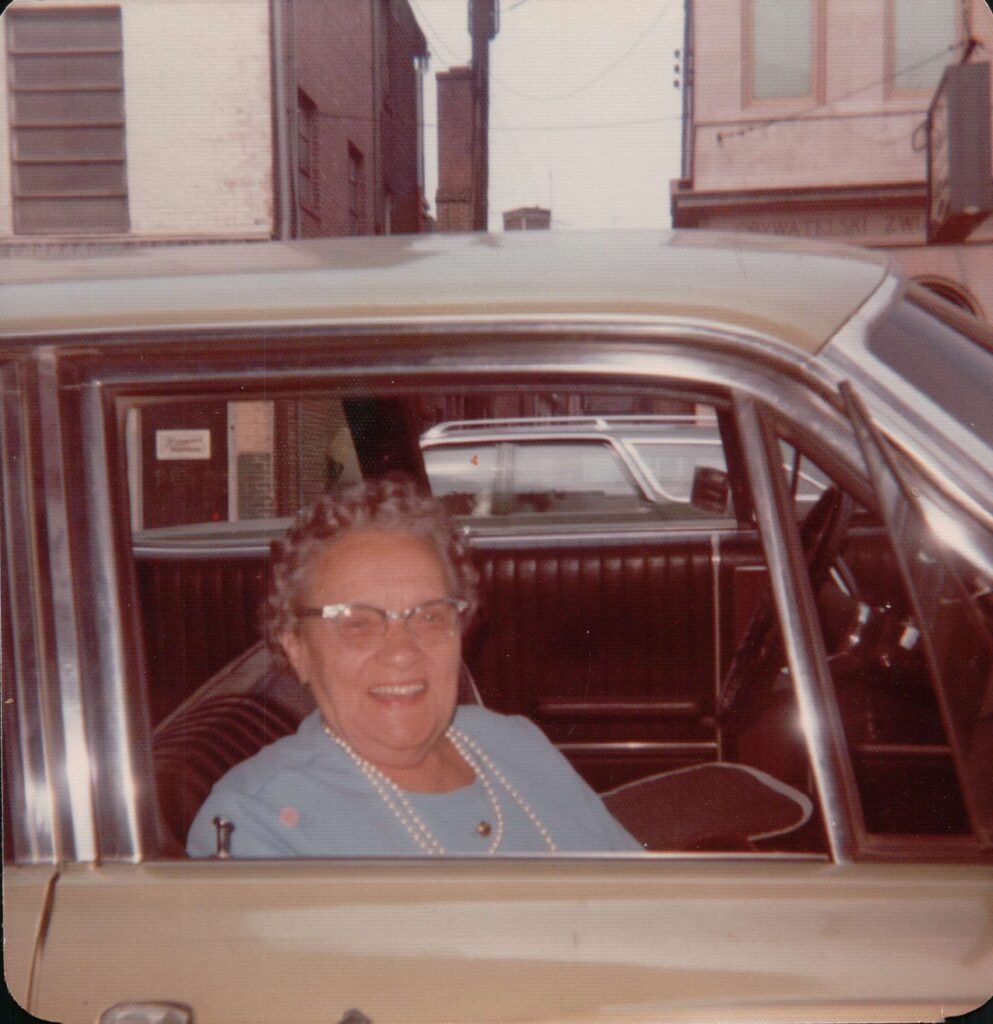
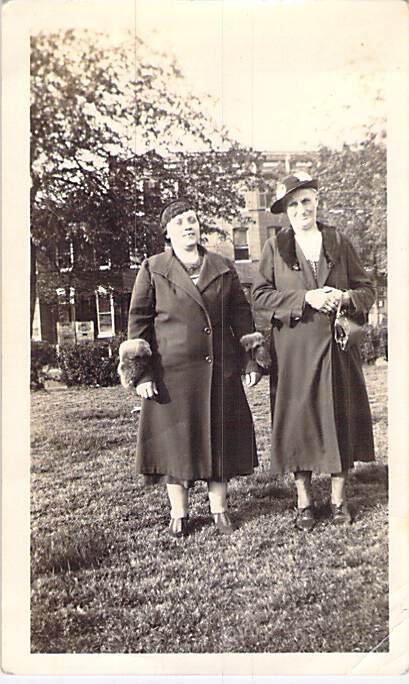
Julie survived Antoni by many years, living to age 87. She was moved to a nursing home where she died on Sep 11, 1983. She lived a long and full life. She was beloved by all. The best was to end this chapter and communicate how special she was to so many people is to share two particular memories.
Memory 1: When Babcia moved to the nursing home where she died, and 1440 was sold, I was an adult and a mom. So, you might say I knew a great deal of my life in 1440 and saw many changes to the family over those many years of growing up; however, the house pretty much remained the same. My memories are from my growing up years – the late 1940’s, and the 50’s. As a teen I visited less frequently. I do remember bringing my boyfriend Gary to meet Babcia and immediately being asked, “When are you going to marry him?”
Memory 2: Most of the kitchen conversation was in Polish. I am told I once spoke Polish as a child but left it behind at age 5 when I began kindergarten. (“Nobody else in school talks that way!”) In 2013 I had the opportunity to be in Poland. I could neither read the signs nor speak a word beyond a few social phrases. One evening, while sitting in the car waiting for our host to return, I heard several women chatting outside. All of the sudden memories flooded back. For a moment, I was taken back to 1440, listening to my Aunts and grandparents. Although I can’t say I spoke the language, it was not difficult to understand the gist of what they were talking about.



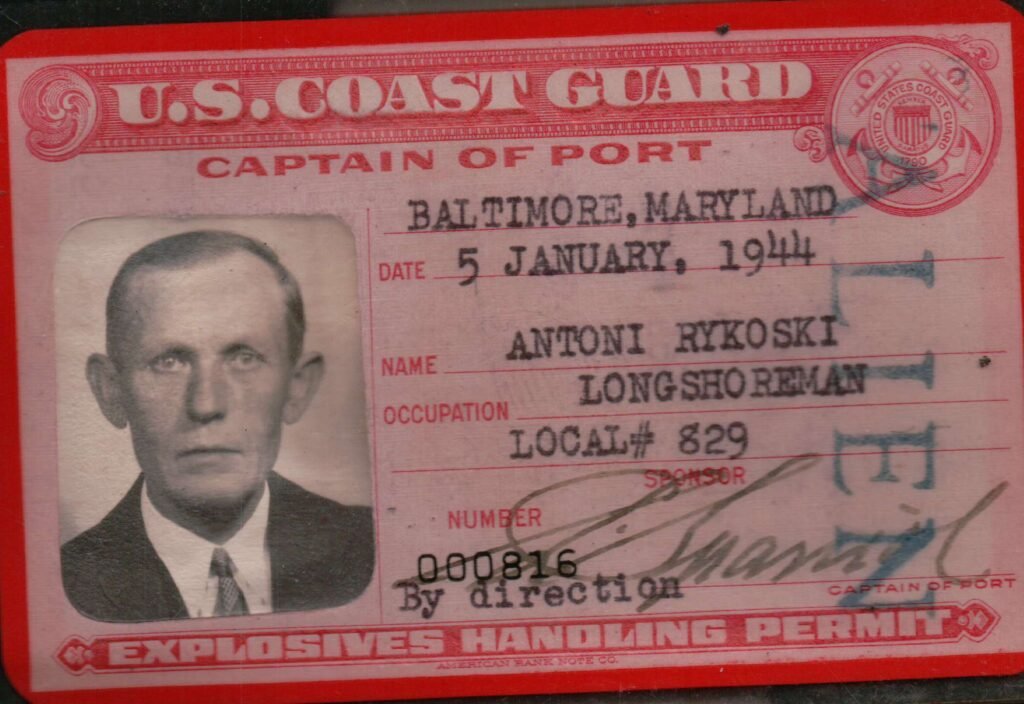

American Generation #2
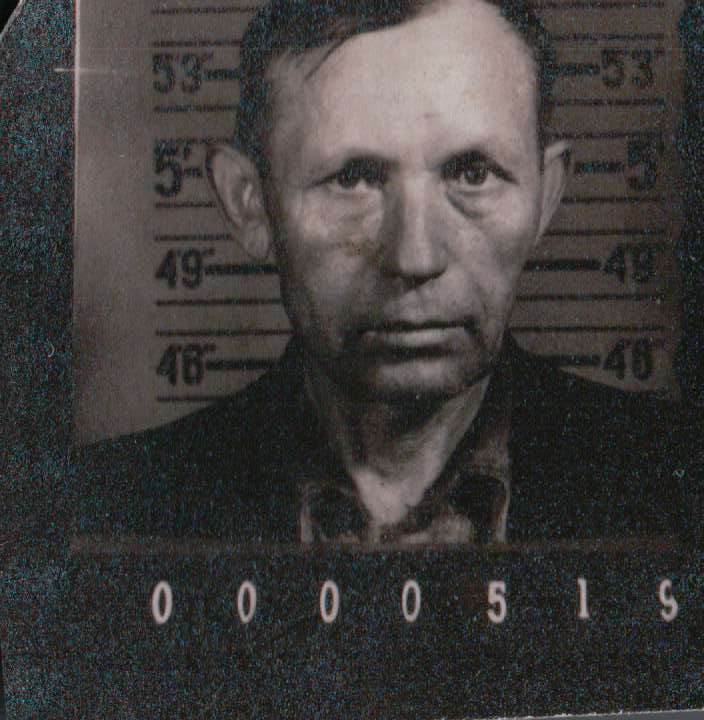
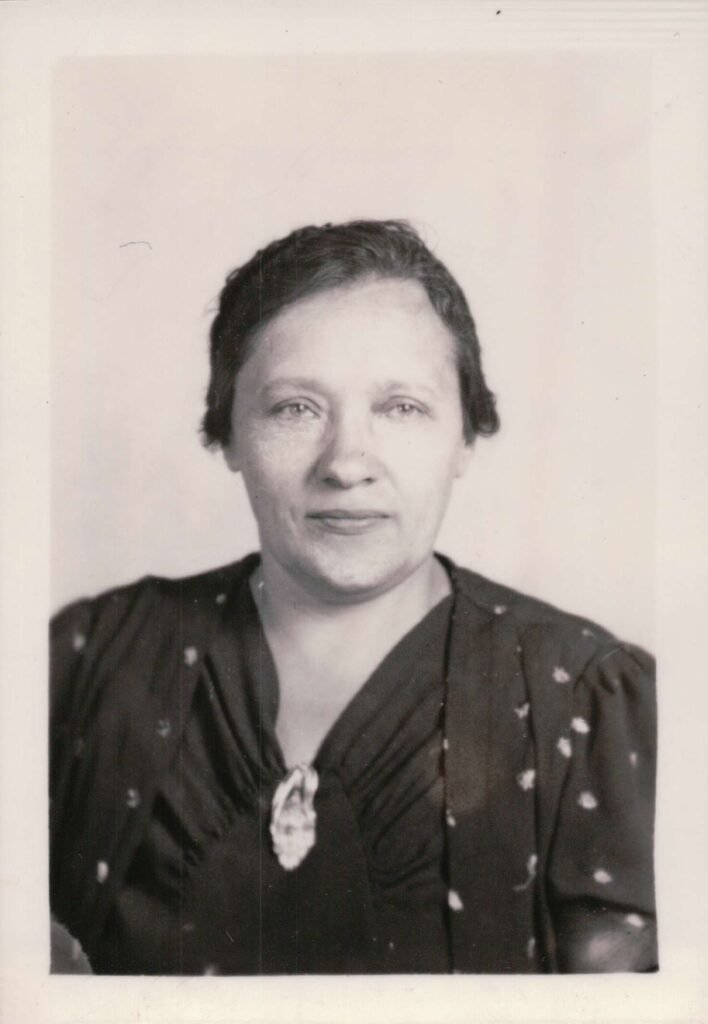
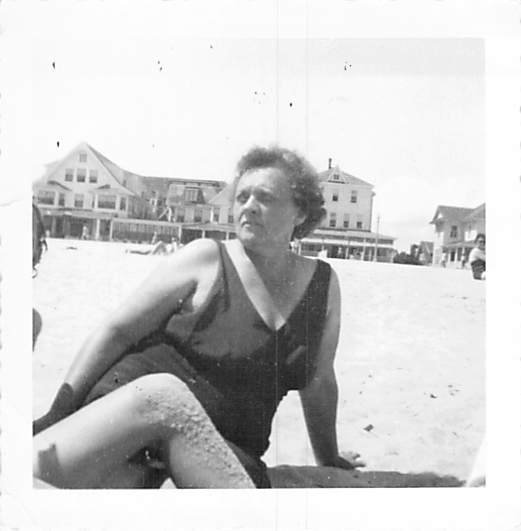
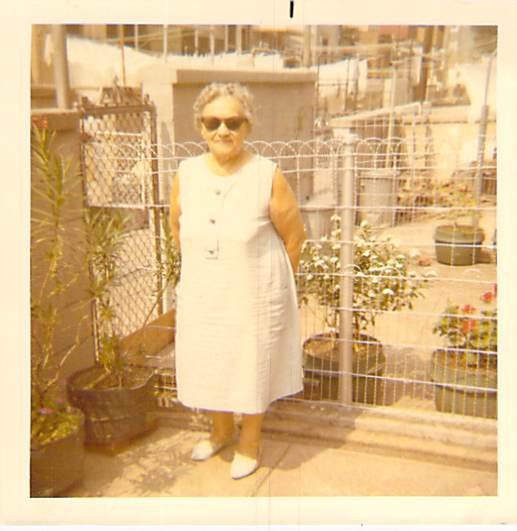
Antoni and Julianna Rykoski and Children
| Antoni Rykoski | b: Oct 26, 1886, Chorzele, Mazowieckie, Poland d: Jan 21, 1951, Baltimore, Maryland |
| Julianna Sparzak Rykoski (Married Feb 1, 1914) | b: Jan 6, 1896, Mlawa, Poland d: Sep 11, 1983, Baltimore, Maryland |
Children (and Spouses)
| Sophia Rykoski WASKIEWICZ Stanley Alexander “Jimmy” WASKIEWICZ | b: Oct 27, 1914, Baltimore, Md d: Jul 22, 2004, Baltimore, Md |
| Annette Josethine ‘Teenie’ Rykoski BERNADY Charles Karel “Charlie” BERNADY | b: Jun 11, 1916, Baltimore, Md d: Feb 13, 1999, Baltimore, Md |
| Melvin Stanley RYKOSKI Margaret “Margie” RYKOSKI | b: Mar 9, 1918, Baltimore, Md d: Sep 15, 1986, AA County, Md |
| Anna ‘Annie’ Laura Rykoski Coulbourn ALLEN John ALLEN | b: Jun 9, 1920, Baltimore, Md d: Oct 27, 1997, Brevard Cty, Fl |
| Anthony J. RYKOSKI Sr. Marjorie E. RYKOSKI | b: Apr 6, 1922, Baltimore, Md d: Apr 19, 2002, Pasadena, Md |
| Leonarda Amelia ‘Lee’ Rykoski MEYER Frederick William “Bud” MEYER, Jr. | b: Nov 6 1924, Baltimore, Md d: Aug 2, 1987, Baltimore, Md |
THE RYKOSKI CHILDREN
The children attended Holy Rosary Catholic School, went to church at Holy Rosary, and played in the neighborhood at Latrobe Park which is located just across Fort Avenue from Reynolds Street and Fort McHenry which is located at the end of Fort Avenue. Each lived in Locust Point until they married and moved to other Baltimore locations including East Baltimore and the Dundalk area. Subsequent chapters will be included to provide details about the lives of the children after leaving 1440 Reynolds Street.
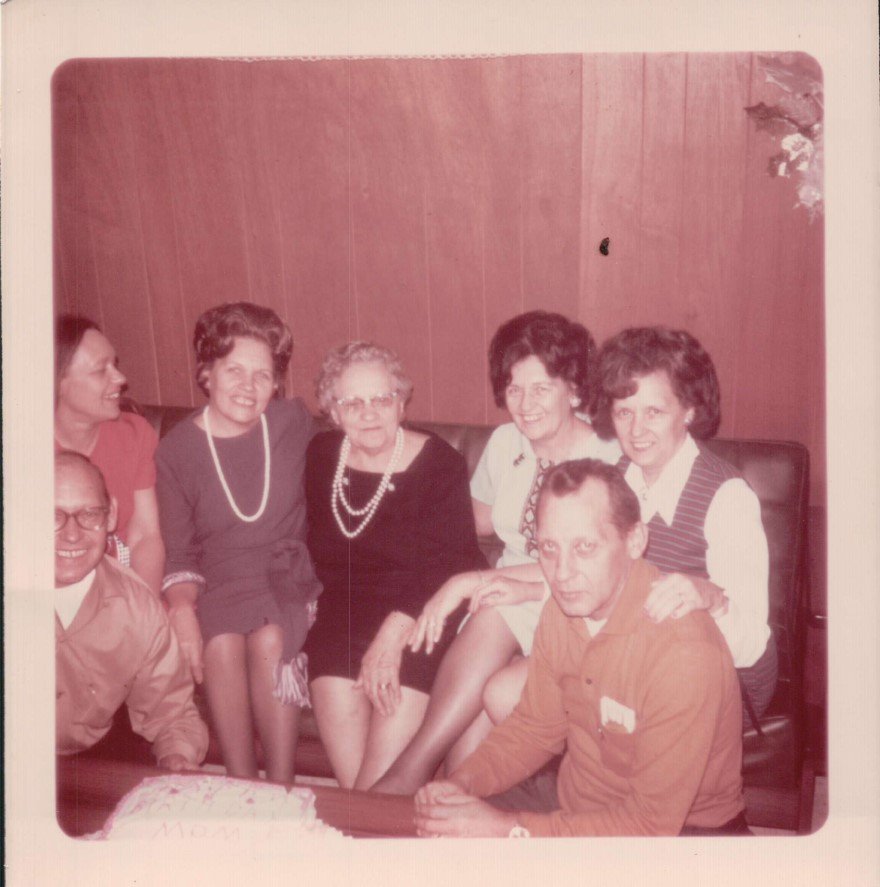


Sophia Rykoski Waskiewicz (Oct 27, 1914 – Jul 22, 2004)
Sophia, the oldest child was born on October 27, 1914 at the beginning of World War I. Julianna was just 18 years old but Antoni was 28 years old when she was born. Sophie was 10 years old when her youngest sister, Leonarda Amelia was born. She and Stanley Alexander ‘Jimmy’ Waskiewicz met at a dance and later married, moving to Philadelphia for several years and then returning to Baltimore. She is not listed in the 1940 U.S. Census as living at 1440 Reynolds Street.
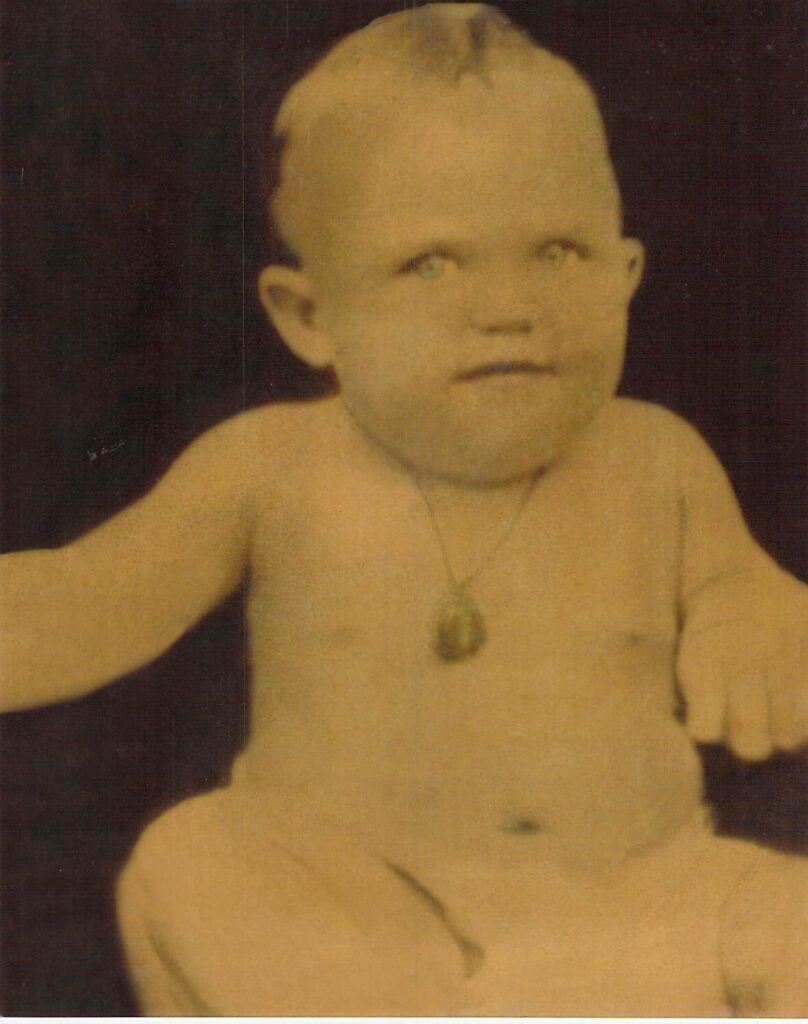

Annette Josethine “Teenie” Rykoski Bernady (Jun 11, 1916 – Feb 13, 1999)
Teenie was born on June 11, 1916, less than two years after Sophie was born and while World War I was raging in Europe. Julianna was 20 years old and Antoni was 30 years old when Teenie was born. Although her formal name was Annette Josethine, her “nickname” was the same as her Aunt Teenie Sparzak Wisniewski (Antoinette “Teenie” Sparzak Wisniewski) who was 13 years old when Annette Josethine was born. Teenie married Charles ‘Charlie’ Bernady on September 17, 1938 at Holy Rosary Catholic Church, less than a month after her older sister Sophie was married and moved to the Brooklyn area of South Baltimore. In the 1940 U.S. Census she and Charlie are living at 1774 Pennington Avenue with a family named Michalski. They eventually moved to Brooklyn Park, a community on the border of Baltimore and Anne Arundel County. Their oldest child, Karel Francis Bernady was born on Feb 1, 1941.
Sophie, Teenie & Evelyn (Sparzak) … Teenie, Sophie & Evelyn (Sparzak)
Melvin Stanley Rykoski (Mar 9, 1918 – Sep 15, 1986)
Melvin was born on March 9, 1918 when Sophie was almost four years old and Teenie was almost two years old. He enlisted in the Naval Reserves on Feb 11, 1937 which enabled him to attend training as a reservist but still live and work at home. He was serving still living at home in the 1940 U.S. Census at age 22 and employed as a fireman at a shipyard. When World War II started he entered into active duty as a machinists mate, reporting for duty aboard the PE-56 Eagle (56) some time before September 30, 1941. He was one of 12 survivors of a crew of 61 when the PE-56 Eagle (56) was sunk by a German submarine off the coast of Maine on Apr 23, 1945. He continued to serve in the Navy until March 6, 1956. He married Margaret ‘Margie’ Bernadette on April 7, 1958.
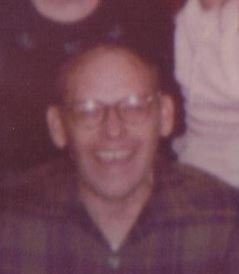


Anna “Annie” Laura Rykoski Coulbourne Allen (Jun 9, 1920 – Oct 27, 1997)
Annie was born on June 9, 1920 when her sisters were 6 and 4 years old and her brother was two years old. She married Austin ‘Tim’ Litsinger Coulbourn on March 23, 1940. Their daughter, Helen Ann was born on Jan 3, 1941.
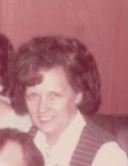

Anthony J. Rykoski Sr. (Apr 6, 1922 – Apr 19, 2002)
Anthony, born on April 6, 1922 followed the pattern of a new child every two years. He was the fifth child and second son of the family. He enlisted in the U.S. Navy on November 16, 1939 and served as a yeoman during World War II. He married Marjorie E. Amos sometime in the mid-1940s. Their first son, Anthony J. Rykoski Jr was born about 1950. The family lived in the Riviera Beach area of Anne Arundel County.
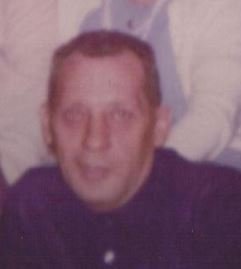
Leonarda “Lee” Amelia Rykoski Meyer (Nov 6, 1924 – Aug 2, 1987)
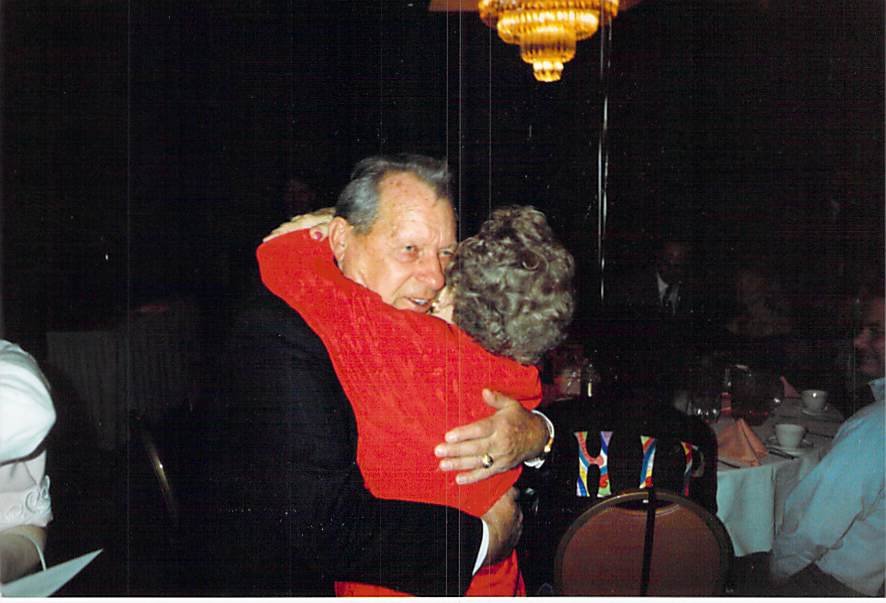
Lee was the baby of the family, born on November 6, 1924. She lived at home until she married Frederick ‘Bud’ Meyer on September 17, 1949. Their first child, Leonarda was born on November 22, 1953. The family lived briefly in Brooklyn, Maryland before moving to a new home in Lanham, Maryland, near Washington, D.C.