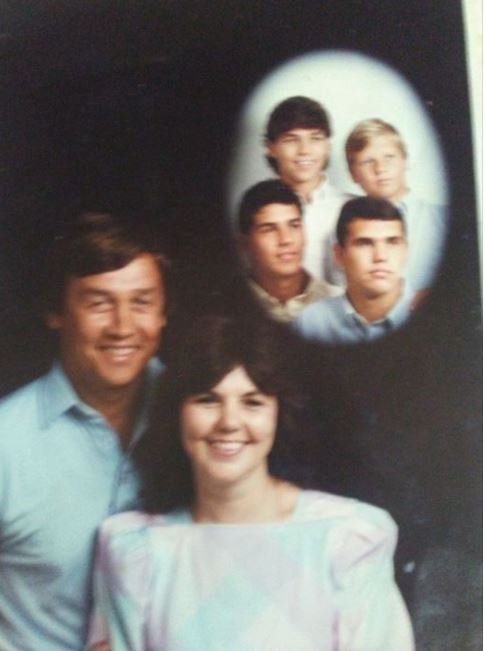
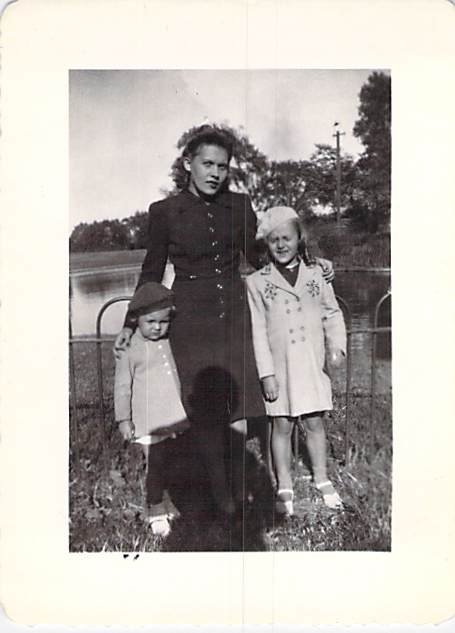
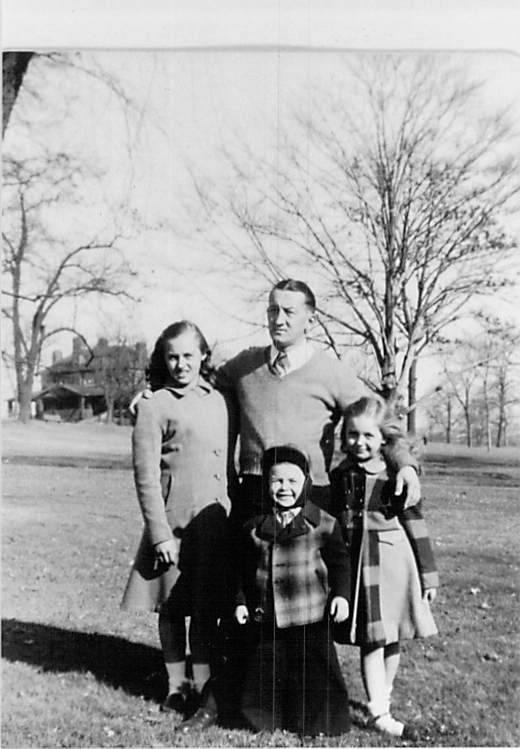
The individuals discussed below are the children of Stanley Alexander Waskiewicz (Stanley) and Sophia Rykoski (Sophie). Sophia was the daughter of Antoni and Julianna Rykoski, first generation Polish immigrants, and granddaughter of John and Amelia Sparzak, who brought their young daughter, Julianna, from Poland to the United Stated in the late 1800s. This family history is a continuation of the Rykoski family history.
Direct Ancestors
1 Departing Poland (late 1800s)
2 Locust Point, Md. (1600s to 1900s)
3 Sparzak Family (1890s-1900s)
4 Rykoski Family (1910s-1980s)
–Life as a Baltimore Longshoreman
–WW II Memories of Locust Point
5 Stanley & Sophie Waskiewicz Family
— –Lollie, Carolyn & Tony Waskiewicz
6 Charlie & Teenie Rykoski Bernady
8 Anna ‘Annie’ Laura Rykoski Coulborn ALLEN
9 Anthony Jr. & Marjorie Rykoski
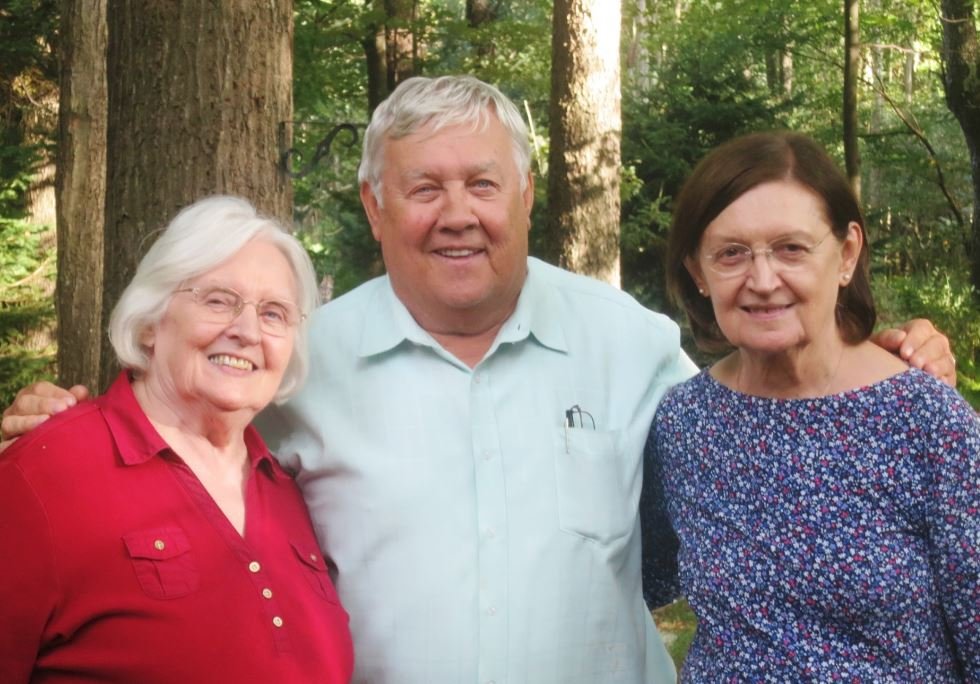
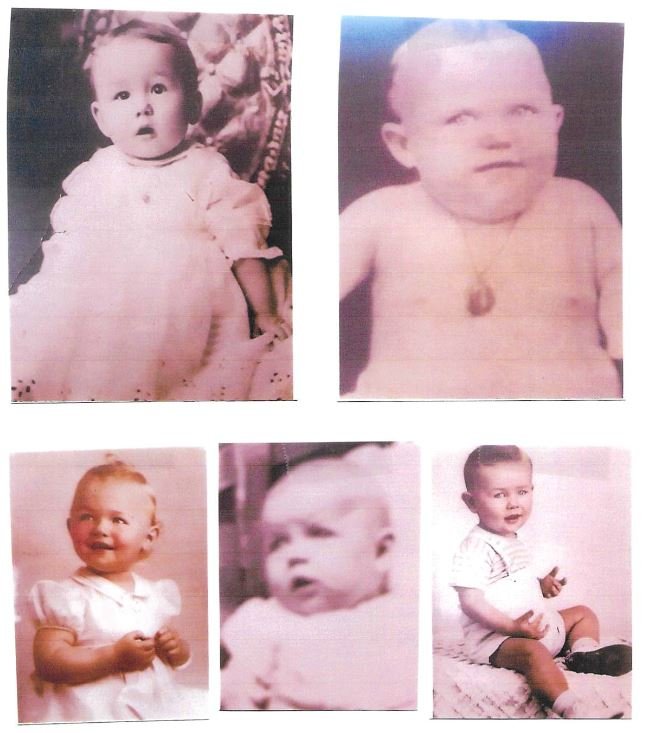
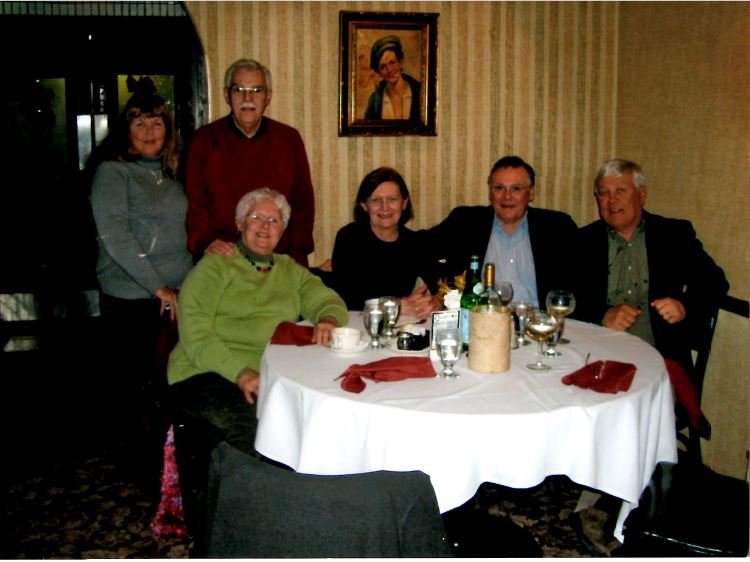
Leonarda ‘Lollie’ Amelia Waskiewicz DACHILLE (b: March 03, 1937)
Leonarda ‘Lollie’ Amelia Waskiewicz Dachille was born on March 3, 1937, in Philadelphia, Pennsylvania. As the oldest child of Stanley and Sophie Waskiewicz, and oldest grandchild of Julianna and Antoni Rykoski, she possesses the most distant memories of people, family events and things that took place many years in the past. She made valuable contributions to various chapters of this family history.
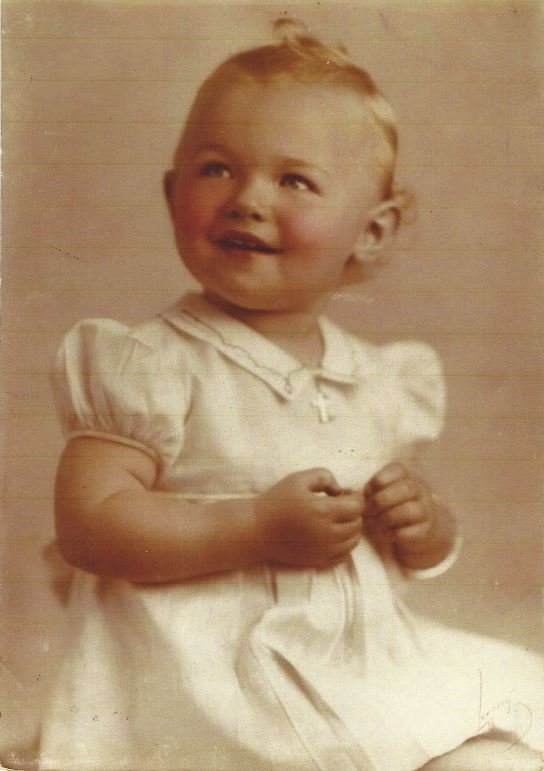

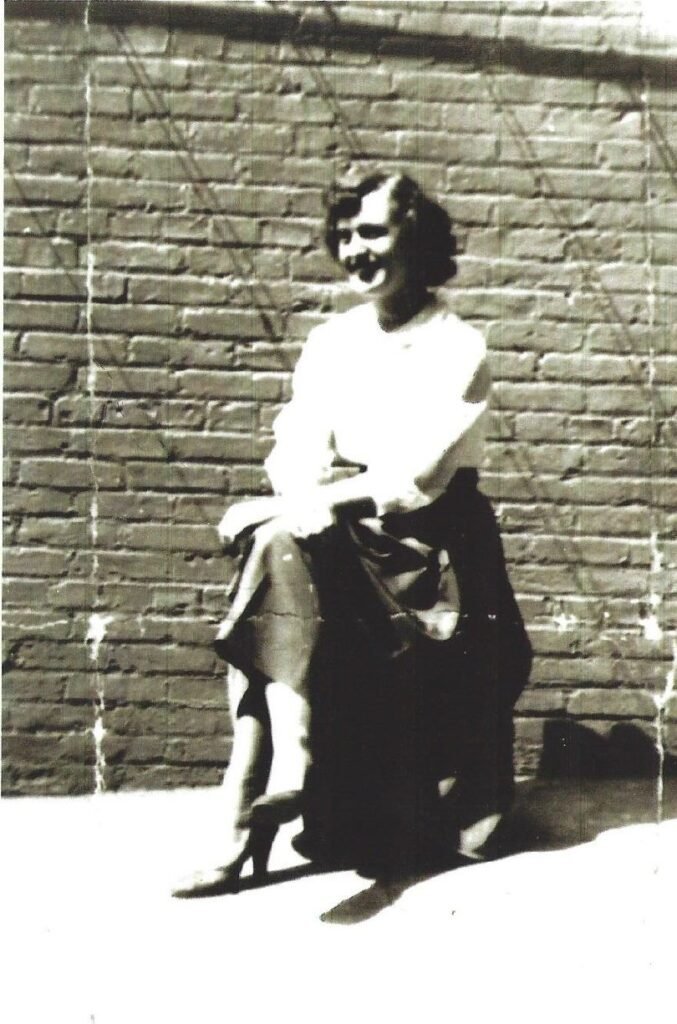

When asked “what is your earliest memory”, Lollie remembers Carolyn being carried into the bedroom to see her father who was very ill and bedridden for quite some time. This likely was when he suffered from Bright’s disease, and the family was allowed to be with him for only a limited time.
In her role as Carolyn and Anthony’s older sister, Lollie had an impact on their early years and experiences while growing up in East Baltimore. Lollie lived with her family on Lombard Street, attending St. Michael’s Parish and going to St. Michael’s school through the eighth grade, and attended the Institute of Notre Dame (IND) high school. As a young girl she played with her sister and baby brother and, as she got older, assumed household chores and responsibilities, as would be expected of an oldest child.
Lollie was an active Girl Scout for many years and actually was chosen to attend a major Girl Scout dinner in New York City with Nellie Lewis, her long time scout leader. This was Lollie’s first airplane experience and in fact, the first for anyone in the family.
Before she was 16 years old, Lollie was working at her first away from home job at the neighborhood Pharmacy on the corner of Broadway and Lombard, earning 25 cents an hour. A few years later, she began to work for Reads Drug Store in Highlandtown, and later at the Reads on Lexington and Howard Streets in downtown Baltimore. Reads was the first “chain” drug store to come into the area.
Since Reads was a streetcar ride away from home, and since her work hours sometimes lasted until store closing, Stanley would occasionally lend his car to Lollie’s then-boyfriend, Dan, to pick her up. It was a break for Stanley, who was tired after a day’s work, but it was also a break for Lollie and Dan. While in college, Lollie worked in the credit office of Hess Shoes on Baltimore and Charles Streets downtown.
Lollie had a busy social life too. She and her friends often spent weekend evenings – with dates or with girlfriends – skating at various roller rinks which were popular in Baltimore at that time. While they spent most of their time roller skating, they also enjoyed ice skating as well.
When Lollie was 15, she and her girlfriends began smoking when they were out of the house and not in school uniform (smoking was an expulsion offence at IND). Sophie discovered Lollie’s hidden cigarettes and really exploded. Lollie was told how shameful it was and that she was ‘crushed’ that Lollie would do such a thing. By the time the anger had subsided, Sophie told Lollie that if she wanted to smoke she had to wait until she was 16. Lollie agreed. It was only a few months until her 16th birthday! (Lollie has been a nonsmoker for decades now!)
She was too young to remember World War II events, but by the late 1940s and early 1950s was more cognizant of local and world events, cultural changes including music, clothing and styles, and witnessed the transition of mass communication from radio to television. Like most Catholic families of that era she was raised with strong religious and moral values. As with many oldest children, Lollie would sometimes say things to her parents and do things that would cause them to yell at or punish her. (Today, with a smile, Lollie remembers her behavior as “mouthy!”) The observant younger children learned from these incidents to remain silent and elude similar parental confrontations.
Lollie met her future husband, Daniel Dachille at St. Michael’s Church when they were both young teenagers. Dan lived nearby at 1812 Pratt Street. Like Lollie, he attended St. Michael’s Church, but he went to St. Patrick’s School. He caught Lollie’s attention by poking fun at a hat she was wearing at an Easter service. They continued to be friends over the years.
When Dan was to graduate from eighth grade at St. Patrick’s church, the principal told him he could attend graduation but would not receive a diploma because his mother still owed back tuition of fifty cents. They did not have the money and the school would not budge. Dan’s mom told him to walk in the graduation anyway but Dan refused. Finally, his mother borrowed money from a kind and generous Jewish neighbor and paid the bill so Dan could graduate.
After completing eighth grade at St. Michael’s, Lollie attended the Institute of Notre Dame (IND), a private Catholic all-girls high school located on Aisquith Street in Baltimore. She graduated in 1954, the same year that her classmate, Maryland Senator Barbara Mikulski graduated. Mikulski stated the following about IND:
“Attending the Institute of Notre Dame taught me that I could do anything I dreamed of doing. The sisters were intelligent, caring and had incredible inner strength. They taught me more than geography or mathematics; they taught me to help those in need of help. They inspired my passion for service.”
Lollie enjoyed her days at IND but, unlike her elementary school academic success, good grades did not come easily. She had a particularly difficult with Latin. In fact, when she was struggling in the class, Stanley worked with her at home and drilled her on the Latin vocabulary and grammar. As a result, Lollie scored high on the test, but the nun who taught the class was not convinced and accused her of cheating. Stanley was so furious that he went to the school to confront the nun and defend Lollie against these accusations. The teacher made Lollie retake the test and she again passed with a high grade. This is one of the rare instances any of the children can relate of Stanley becoming involved in school and academic matters (which is why Tony and Carolyn often tell Lollie that Stanley, their Dad, loved her best! J).
After high school Lollie attended Towson State Teacher’s College (now Towson University), majoring in education. Although her college studies were interrupted by marriage and family, she eventually returned to college and completed her degree.
Dan attended and graduated from Baltimore Polytechnic Institute (Poly) high school, then located on North Avenue, in 1953, a year before Lollie graduated from high school. Rather than attend college immediately after high school Dan began working for an insurance company in Baltimore.
Dan and Lollie became engaged at the midnight mass at St. Patrick’s Church in December 1956 and were married on April 27, 1957, at St. Michael’s Church. Prior to getting married Dan was drafted into the Army. Although there was no active war, the military was still relying on the draft process to acquire recruits. Dan was in good company as Elvis Presley was also drafted into the Army in 1957.
After Dan and Lollie enjoyed a three week honeymoon, the groom left for training at Fort Riley, Kansas. Lollie continued living at home in Overlea, since Dan’s eventual duty location was not yet known. By summer of 1957 Lollie announced that she was expecting. She did not return to Towson State that fall. After Basic Training, Dan remained at Fort Riley where he trained for cryptology (which required top secret clearance) in preparation for a tour in Germany. When his group left for overseas, Dan was granted a deferral until his son was born on February 6, 1958. After a three week leave, Dan left for Bad Krueznach, Germany, for 15 months. Lollie and their son lived with Stanley and Sophie, Aunt Carolyn and Uncle Tony during that time. When his tour was completed, Dan returned and spent time getting to know “Little Danny” and acclimate to life as a civilian.
Things were financially tough for this young married couple, even during the time Lollie and the baby lived at her parents’ home. Rather than enjoy the sights of Germany and Western Europe during his leave time, he stayed close to the barracks, sent most of his money to his family, and in fact sold his allotment of cigarettes to send additional money home.
After returning from Germany, Dan went to work for Bendix Corporation in 1958 and the family moved to Dundalk, Maryland, purchasing a home. Dan’s experience in the Army made him appreciate the importance of obtaining a college degree and he enrolled in an engineering degree program at Johns Hopkins University. Working in the daytime, taking engineering classes at a challenging University, and carving out time for his family was not easy. Sometimes Dan took time off from his studies, but over time he prevailed, earning a degree in Industrial Engineering after considerable hard work and fortitude. In 1981, Dan began working at Bethlehem Steel Company in Sparrows Point, from which he retired in 1997.
A second son, Mark Steven Dachille was born on March 31, 1960 and a daughter, Pamela Ann Dachille was born on February 28, 1964. Lollie was a “stay-at-home” mother, taking care of the children.
Pam was born with a condition called craniostenosis that made it necessary to have several serious skull operations. The first was at six weeks, again at 6 months, and finally at about two years. Except for the fact that Pam needed to wear glasses, the operations had no ill after-effects whatsoever; however, these were trying, worrisome and wearisome time for the young family.
The family worked hard and divided duties. They attended St. Rita’s Catholic Church in Dundalk, where they volunteered in various roles. As the children reached school age Lollie worked as a substitute teacher at St. Rita’s Catholic School.
Lollie returned to Towson State in 1984 to finish her degree and complete her student teaching requirements. She began teaching special education classes and enrolled at Loyola College, pursuing her master’s in education degree, specializing in working with emotionally disturbed students. Lollie continued teaching disabled students, expanding her education to include certification in learning disabilities and in administration. When she retired, in 1997, Lollie was department chair at Patapsco High School.
After retirement, Dan and Lollie had a new home built in Bowleys Quarters. A highlight for them was a trip in 1998 to Dan’s family’s village in Italy where they visited various sights in that country. They also enjoyed a number of summer vacations in Myrtle Beach, South Carolina.
They continue to enjoy time with their children and grandchildren. Dan and Lollie celebrate their 60th wedding anniversary in April, 2017.
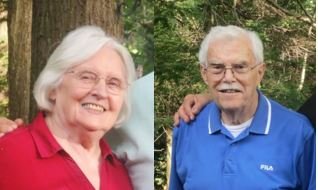
Update on the Dachille Children
Daniel Andrew married Debbie Hutson on November 20, 1977. They both worked hard at various jobs and raising their daughter, Michelle, who was born on January 17, 1978. Debbie now enjoys being “Nonna” to her three grandchildren, while Danny continues to work as an instrument engineer for Constellation Energy. Michelle married Eric Harris on October 29, 2005, and has three children. Michaela, born June 20, 2007, is currently in the 4th grade and loves to “cheer”. Daniel was born on December 18, 2009, is now in the first grade where he enjoys art, rockets, dinosaurs and Karate. Isabella was born July 23, 2012, in currently in pre-school, where she enjoys everything.
Mark Steven attended Western Maryland College and University of Baltimore Law School. He is a construction attorney and a partner in Huddles, Jones, Sorteberg and Dachille. Mark has four children. Christina Lynn was born August 11, 1983, and married Ron Jordan on September 28, 2008. They currently live in Perry Hall. Chris is a school counselor with the Baltimore County Board of Education, completing a doctorate degree at johns Hopkins University. Kelly Nicole was born April 22, 1988 and is a homeowner and entrepreneur living in Charleston, South Carolina. Garrett James was born on July 1, 1985, and married Kate Farrell on August 1, 2010. They have two daughters: Juno Aurelia, born July 10, 2013, and Maris Viviana born February 27, 2015. Garrett graduated from University of Maryland and is a construction engineer. Dominic James was born on April 29, 1998 and is currently attending Hendrich’s University in Arkansas, where he plays lacrosse.
Pamela Ann was born on February 28, 1964, and married Tim O’Dell on March 15, 1992. Pam graduated from Western Maryland College and for 20 years has worked for Boetcher Corporation in Bel Camp where she is now assistant comptroller. Tim teaches English at Patterson Mill High School. They have two children. Timothy Daniel was born December 28, 1994. He currently attends University of Maryland Baltimore County and works at Boetcher Corporation where he will be working in I.T. Anna Elizabeth, born August 24, 1999, is a senior at Patterson Mill High School and will be attending McDaniel College, formerly Western Maryland College. Having performed in numerous plays and musicals, as well as working behind the scenes, Anna is interested in pursuing a career in education and drama.
Carolyn Ann Waskiewicz HARRIGER (b: April 25, 1941)
Carolyn entered life as the middle child of the family, born on April 25,1941. Carolyn was actually officially named “Irene” at birth, according to her birth certificate, but her family must have subsequently reconsidered their naming decision, since they used Carolyn Ann on other church and school records. Her baptismal certificate, with which Carolyn was familiar, stated her name as Carolyn Ann Waskiewicz. Years later, when Carolyn obtained her original birth certificate in order to apply for a passport, she learned about her birth name. The realization was somewhat shocking, but she subsequently hired an attorney and had her name legally changed, from Irene to Carolyn.
Growing Up – Early Years (1941 to 1945)
Like most adults, Carolyn has fleeting recollections of her earliest years. She recalls sitting in a high chair at the kitchen table on a Sunday afternoon. Her mother had made duck soup and her Uncle Carl Waskiewicz, tall, thin and wearing his Army uniform enters the kitchen, likely just arriving home since his entry created a great deal of excitement. Carl served with Chennault’s “Flying Tigers,” fighting in the Pacific theater during World War II and was likely home on leave.
Carolyn also remembers the commotion caused when the end of World War II was announced on August 14, 1945. Lombard Street was filled with balloons, banners, confetti, noise, and drinking celebrants were pouring out of the neighborhood bars. Her parents explained the reason for the celebration, but young Carolyn did not fully understand what it meant. She was instructed to stay on the front steps and vaguely remembers big sister Lollie, who was eight years old and wearing a blue dress, running down the street with the noisemakers. In the excitement of the moment Carolyn left the steps, followed Lollie and was later spanked for not obeying her parents. Carolyn later learned that it was not Lollie whom she pursued down the street, but some other girl in a blue dress.

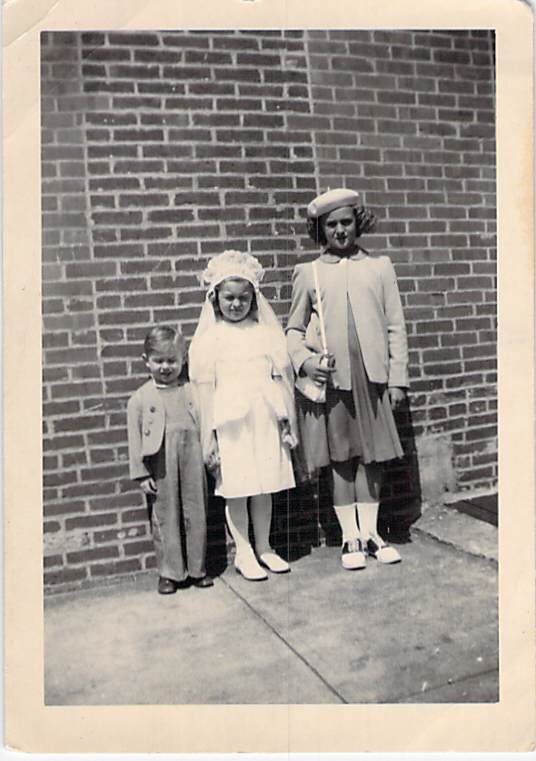
Carolyn also remembers going to poultry markets on Fleet Street with her father to purchase chickens and ducks for soup. The animals were alive and in cages when purchased and once selected were killed, partially butchered, and packaged for the customer. Carolyn recalls the terrible smell of the poultry markets.
The family shopped at nearby Pete’s Grocery. Like many local stores in those days, Pete’s would extend credit until pay day, tracking purchases on a card. The family consumed a lot of bologna purchased from Pete’s Grocery.
Carolyn attended Catholic Community House kindergarten for two years. Although she wanted to learn to read, the kindergarten was operated more as a daycare playschool where the children were encouraged to play during the day. A grandson of Mrs. Sokoloski , the next door neighbor, named Jerry Gray, a future Notre Dame football star, also attended kindergarten there and Carolyn liked him even at that early age. His family later moved from the area.
The winters were very cold since the family had only the heat generated from the coal/wood burning stove. Occasionally it snowed, affording Carolyn and her sister an opportunity to play outdoors until they were wet and cold and would return inside and sit by the stove to get warm again.
As noted earlier, the family had only an icebox which would keep food cold as long as Sergi the ice man would deliver a block of ice, which he did each week. According to Carolyn, Lollie thought he was cute. In the summer he would give the girls a small chunk of ice to chew on.
Carolyn loved visiting Patterson Park with her sister and visiting and playing with her cousins. Monica Johns, daughter of Evelyn Sparzak Johns and Lollie and Carolyn’s second cousin, lived a few blocks away so they would see her more often. The other cousins would also come to visit and play while the grownups talked.
Age 6 to 10 – Grades 1 to 5 (1946 to 1950)
Carolyn, following in Lollie’s footsteps, attended St. Michaels Catholic Girls’ School. She recalls no outstanding teachers, but does recall enforcement of strict discipline. She was a quiet, generally obedient student who followed instructions and stayed out of trouble during these years, earning “B” grades in many classes and avoiding getting in trouble on the rare occasions where she “made mischief.”
The children sat at double desks with inkwells and a shared single bench for two students, with lids that rose, providing storage for books and other items. The school children had chocolate milk breaks in the morning. Carolyn went home for lunch, since her mother was home taking care of little Tony.
In the post-World War II era, schools were required to conduct air-raid drills. Children were required to move to a safe location and cover their necks with their hands. Carolyn remembers sitting under her desk with her scarf over her head, but not really taking the drills seriously, doubting that a bombing would actually occur.
Carolyn recalls that she loved when they visited Grandfather Rykoski , going with him and her dad on mushroom-picking walks, or fall “walnut hunting” trips to wooded areas just beyond Curtis Bay and Brooklyn Park along Ritchie Highway before much of the current heavy development occurred. Picked mushrooms were typically consumed, but walnuts required a more elaborate process, starting with the messy task of drying and removing the outer skin, followed by their subsequent shelling. On these trips Stanley would point out various wildflowers and species of trees, instilling a lifelong love of wooded, outdoor areas in his children.
In the summer the family vacationed at a cottage on Hart-Miller Island located where the Middle River enters the Chesapeake Bay. The children played on the beach, learned to swim and enjoyed their time at the cottage. Like many families of that era seeking to escape the sweltering temperatures in the city before homes were air conditioned, the Waskiewicz family sometimes went to Breezy Point and other local Chesapeake Bay beaches on Sunday afternoons to swim and picnic. Sometimes interesting events occurred on these trips. Carolyn recalls the following:
One week while heading back in the traffic approaching Highlandtown, a policeman jumped on the running board of our car and told my father to ‘follow that car’. My father sped up and after a block or so the policeman jumped off to apprehend whomever it was he was after. What a trip!
During the elementary school years Carolyn learned to read, gained an appreciation for it, and became an avid fan of the library. The Enoch Pratt Free Library Branch 19 was about 6 blocks from the Waskiewicz home on Lombard Street and Carolyn went at every opportunity. She was allowed only two books at a time because of her age, but would take her two books home, read them, and return them the next day. It was not long before she was venturing into sections of the library that contained books for older children to find more interesting books to read. Her love of reading continued through the years.
Carolyn’s second grade teacher suggested to her mother that she take piano lessons in the convent after school one day a week. Since the family did not have a piano at home Carolyn would go to the convent every day to practice her new-found love for the piano. This continued for the next four years, through the sixth grade. Over the years Carolyn continued to search for a piano when the chance arose. Eventually Gary inherited his family piano and it has resided in the Harriger living room for several decades. Like reading, playing the piano continues to be one of Carolyn’s great pleasures.
At age 7 Carolyn joined the Brownies. Her first troop met in a church at Broadway and Gay Street and she typically went on her own unless Lollie had a Girl Scout meeting at the same time. Later Carolyn joined a Highlandtown troop and traveled by herself through Patterson Park to attend meetings. If there was bad weather Sophie would give Carolyn ten cents to take the street car, but she would walk anyway and use the money for candy.
On Carolyn’s 10th birthday her Uncle Carl gave her an autograph book and told her that this was a sign of growing up. Now her age had 2 digits and would until she was 100. Sadly, Carolyn no longer has the autograph book.
Age 11 to 14 – Grades 5 to 8 (1951 to 1955)
Grades 5 and 6 were not especially memorable ones for Carolyn. She recalls being bored and also that the nuns were not particular nice during those years (in her own words: “mean nuns during both years!”).
Things became more interesting by the 7th and 8th grades, as she discovered boys, joining her classmates at the pencil sharpener next to the window to watch as the Boys’ School was dismissed. Carolyn’s favorite was a boy that the girls referred to as “Eddie Fisher”, a current teen idol, because he was so handsome. She has long since forgotten his real name. Friendships also became more important as Carolyn spent as much time as possible with her friends, hanging out at some of their homes (which she thought were more interesting than hers), at the candy store, and walking to Eastern Ave. to hang out at a soda shop. The “Yoo-hoo” Bottling Company was located on Register St., around the corner from the Waskiewicz home. Carolyn remembers spending time there, watching the bottling operations.
By the 8th grade Carolyn had reached the age where, like many teenagers, she was bold enough to engage in minor adventurous and rebellious acts. Her 8th grade teacher, a nun, expressed her dislike of St. Patrick’s Day, and Carolyn and her friends decided to pin a large shamrock to the end of her veil. Carolyn attempted the deed and her efforts did not go as planned, resulting in the only time where she was “in trouble” at school.
Being a Catholic School student in the 50s meant spending a lot of time in church, every school day and, during Lent and other Catholic holiday seasons, several times a day. At this age it was difficult for Carolyn to appreciate the rationale and meaning for doing so, but she was dutifully doing as she was instructed. Catholic school teachers expected students to memorize vast quantities of information, since memorization was then the preferred teaching method. Carolyn, like many young people at that age struggled with that aspect of her education. Her sister, Lollie, however, was adept at memorizing and remembering what she was taught. Carolyn’s own personal perspective was that she did well enough, struggling in some areas and doing well in others.
Her memories of home life at this period are fleeting, primarily because she spent a lot of time out of the house, at friends, as an active Girl Scout, and attending activities such as Catholic Youth Organization (CYO) dances. As the middle child, she kept a lower profile than her older and younger siblings. Lollie was in high school and Carolyn “ignored” her a great deal. She recalls that Lollie, as oldest children tend to do, was more vocal at home, sometimes resisting parental instructions, leading to more direct conflict with them. Carolyn, observing the consequences, was more inclined to remain quiet at home and stay out of trouble. This meant staying in her room, reading. Carolyn also tended to ignore Tony, whom she considered a “baby,” even though he was only three years younger.
Specific memories from this period include going to the “shore,” using chicken necks tied to a string to attract crabs, and retrieving them with a net. The best part was enjoying them later, after they were seasoned and steamed. The crabs were spiced with Old Bay Seasoning which was produced by McCormick and Company at its large spice production facility located, at the time, on Light Street, in what is now the Baltimore Inner Harbor. Carolyn recalls that in addition to producing a distinctive spice smell in the Light Street area, McCormick’s always put up a huge Christmas tree on top of the building during the Christmas season. Carolyn also recalls her father and mother’s love of raw oysters, recalling how her father shucked and swallowed each oyster. Carolyn did not follow in her parent’s footsteps as an oyster-lover, but liked most Marylanders, crabs are at the top of her “If I could only have one food …” list.
Eighth Grade graduation was a significant event for multiple reasons. It coincided with the family move from Lombard Street to Overlea, which meant moving away from friends. But the move also represented exciting changes for Carolyn and her family. It also required an important decision about which high school she would attend.
Many of Carolyn’s classmates were planning to attend Catholic High School of Baltimore, an all-female Catholic high school located in Northeast Baltimore, on Edison Highway. Carolyn wanted to join her friends at Catholic High School, but her parents were determined that she would take a different path.
Her sister Lollie attended the Institute of Notre Dame (IND) high school, which at that time was very selective in terms of whom it admitted. Lollie was the first graduate of St. Michael’s Parish to be accepted by and attend IND, which made both St. Michaels and her family very proud. Carolyn’s parents expected her to follow Lollie to IND. Carolyn, recognizing the obvious advantage of applying to IND, since Lollie had attended and done well academically, followed her family’s wishes. She applied and was accepted.
At the time, tuition at IND was $50 a semester, which was a great deal of money to the Waskiewicz family. Stanley and Sophie worked hard to pay the annual tuition, reconciling the financial burden by observing that: “At least our children are going to get a high school education.”
Carolyn recalled little about the move from Lombard Street to Overlea. However, she did recall taking a shower the first night in the new house. Lombard Street had only had a bathtub, and except for an occasional shower at Aunt Teenie’s house or while on vacation, this was a new treat and Carolyn recalled that first shower fondly.
Age 14 to 18 – Northway Drive and High School (1956 to 1959)
The trip to school at IND from Overlea involved boarding the #19 bus on Northern Parkway and getting off about a block from IND. This daily journey was reversed after school. Carolyn did not have a car, but she would sometimes ride with friends who had reached driving age and had one.
To earn money during high school she babysat, ironed clothes for other families, and later worked as a gift wrapper at Hutzlers Department Store in downtown Baltimore.
All IND teachers were nuns, and Carolyn recalled that a few were very good teachers. Carolyn offered that she never excelled academically at IND, but she loved writing, literature and history. She did not like math or science of any kind and did not apply herself as much as she might in these subjects.
During her Freshman year, when Carolyn was staying late to make up an assignment, her English teacher happened to be conducting auditions for the Junior Varsity Debate Team. She urged Carolyn to audition, which led to a spot on the team. Joining the Debate Team was a turning point, leading to active involvement, over the next four years, in IND activities, school, and lasting friendships. Carolyn’s extracurricular involvement was supported by her parents. She remained at school each day until late in the day, spending even less time at home. She held some minor school offices and was involved in many clubs and events. High school was a happy and free time.
Since students from all over Baltimore attended IND, Carolyn’s circle of friends included girls who lived in many different neighborhoods. While she still had friends in the Overlea, Hamilton and Parkville areas, on many days she would borrow her father’s car and travel to Catonsville and communities on Baltimore’s west side.
Carolyn also dated during her high school years, and frequented Montebello and the Hamilton Recreation Center and a few other teen dance halls in the area. Lollie married Dan Dachille, her boyfriend from the old neighborhood in April, 1957, while Carolyn was finishing the 10th grade. Her parents gave her plenty of freedom since she was working hard in school and was generally well-behaved.
As her IND years came to a close, Carolyn was confronted with the same transitional challenges that confront most high school graduates – what was she going to do after high school? In the 1950s parents did not expect daughters to attend college, but rather to get married and start a family. But Carolyn was determined that she was going to go to college , despite her parents’ desires.
Carolyn’s sister, Lollie attended Towson State Teachers College (now Towson University), which at the time provided free tuition for a pledge to teach in Baltimore City schools for several years after graduation. By the time Carolyn reached her senior year this program was no longer available, so if she attended Towson she would have to pay tuition. Carolyn’s solution was to obtain a college education and become a teacher by joining the Catholic Sisters of Notre Dame convent.
Finishing high school was a milestone for Carolyn, as it is with many young people, marking the transition from childhood and adolescence to adulthood. Carolyn recalled that her graduation was a “big deal” for her and a special event for her family.
Age 19 to 25 – Maryland and Florida (1960 to 1966)
Shortly after graduating from high school Carolyn said goodbye to her family and moved into the convent of the Sisters of Notre Dame in Baltimore , to begin training which included attending college. After a period of time teaching at a school in Ellicott City while attending college, Carolyn was transferred to a convent in North Miami Beach, Florida, where she began teaching elementary school classes, and continued her education.
While teaching a fifth-sixth grade class in 1963, President John F. Kennedy was assassinated in Dallas, Texas, an event that shocked the nation. The school principal called Carolyn to the classroom door and delivered the news. She told Carolyn to dismiss the children but not to tell them what happened. The school was in the process of notifying the parents. That day felt like a dream-trance. These were things that didn’t happen in the world of that time. For the next several days, events unfolded in a surrealistic manner. Everyone stayed riveted to their televisions, watching reruns of the assassination, the capture of the assassin, Lee Harvey Oswald, and then Oswald’s murder while in custody. This was the first in a series of assassinations during the 1960s that ushered in a gloomy national mood.
During those convent years, Carolyn faced periods of doubt and uncertainty about continuing along her current path. She recalls positive experiences and good times, but that her convent years were not particularly happy ones. Carolyn left her convent in June of 1966, returning to Baltimore. She almost immediately obtained a job at Johns Hopkins Medical School as an assistant in the Physiology department. She notes the irony since she had little love for science subjects when she was in school. But she loved her new job.
In December, 1966, Carolyn and her friend Beth signed a lease on an apartment in the Johns Hopkins University neighborhood. They celebrated by going to a local ‘singles’ bar named “Smitties,” located on Greenmount Avenue. While there, they were joined in conversation by a young man from Ohio who had just arrived in Baltimore from Colorado a few days before to start a new job. His name was Gary Harriger and before the evening was out he asked Carolyn for a date, which she accepted. He had also invited Carolyn’s friend, Beth to go out, but when Beth learned about the invitation to Carolyn she cancelled. The date, which occurred on the next weekend, went well and from that time both Gary and Carolyn dated only each other.
The assassination of Martin Luther King occurred in April 1968 while Carolyn was working at Johns Hopkins. The event triggered major riots in Baltimore that necessitated deployment of the Maryland National Guard and setting of a curfew in the evenings. Carolyn could not attend work during the riots. After the riots ended, if Carolyn worked late, she would be accompanied to her car by an African-American Hopkins security guard, who became her friend.
Another incident that occurred during the riots involved Lollie’s daughter, Pam, who was admitted to Johns Hopkins Hospital for surgery. Carolyn and Gary lived in an apartment in the Loch Raven area at the time and they were watching Lollie’s two boys while Lollie spent time at the hospital with Pam. There was some anxiety about taking the boys out during the day and worrying about the approaching curfew. Lollie and Dan recall looking out the window and seeing the sight of fires through the burning city.
Only two months after Martin Luther King was assassinated, in July 1968, Robert F. Kennedy, the brother of John F. Kennedy and candidate for president was assassinated. Carolyn recalls coming to work after Robert Kennedy’s assassination. Many sat in the laboratory where they worked and cried. The sentiments were not really politically-based. They were a symptom of what was happening in the world during the turbulent 1960s.
Age 26 to 34 – Marriage and Children (1967 to 1975)
Carolyn and Gary became engaged in summer of 1967 and were married on a balmy February 17, 1968. After a short honeymoon in New York City, they moved into a small apartment near Lock Raven Boulevard and Northern Parkway.
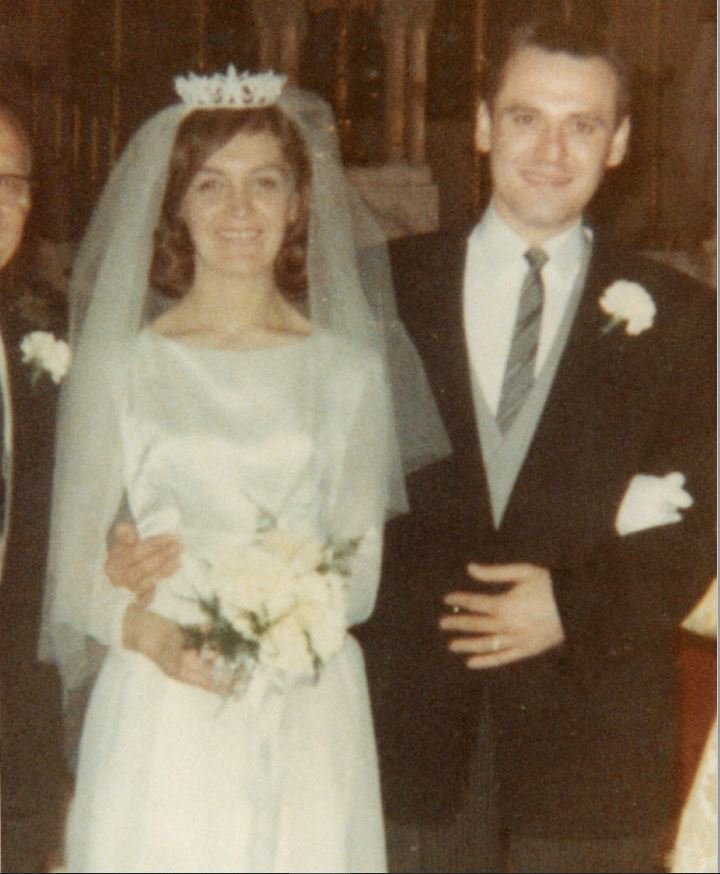
This period marked major social upheaval in America. News about the Vietnam War inundated both the print and television media. The stories of Marylander fatalities, young men who grew up in the same neighborhoods and went off to war, were particularly distressing. The “hippie movement” was in full swing by the late 1960s. Since Gary was exempt from the draft the War had little direct impact on Carolyn and Gary. However, a few years later, Carolyn and Gary pursued an opportunity to adopt a Vietnamese orphan, but when Carolyn became pregnant they cancelled the adoption process.
In 1970 they purchased their first home in Joppatowne, Harford County. Over the next several years they moved to a home on Heather Road, in Bel Air, a community located in Harford County, and then again to Camelot Drive, in Bel Air, which was where their children grew up and attended the local schools.
Carolyn was still working at Johns Hopkins Medical School when she and Gary married, but she realized that advancement would require returning to school and taking science classes. Instead, she resigned her position in 1969 and started teaching at a Baltimore City public elementary school located on The Alameda. The next year she moved to another school located in Edgewood, Maryland. However, when she became pregnant in 1971, she resigned her teaching position. Jason was born March 1, 1972; Rachel on March 2, 1973, and Karen on October 10, 1975. While the children were young Carolyn stayed home to raise them.
Employment
Carolyn returned to the workforce in 1979. For the next five years she worked at Harford Community College, teaching a few adult literacy and English as a Second Language courses, part time, and eventually becoming an adult student advisor in the Adult Basic Education program. She knew immediately that adult education was a perfect fit.
In 1985 Carolyn moved to Towson University’s Continuing Education Program. She started as an academic advisor and eventually became program developer for adults returning to college and director of informal continuing education.
In 1992 and continuing to 1999, Carolyn worked for the University of Maryland Baltimore County as Director of Business and Non-Credit Education.
Education
Carolyn achieved her long-held ambition of obtaining a college education, obtaining a bachelor’s degree, two master’s degrees, and a doctorate. In 1968, after eight long years, she obtained her bachelor’s degree in English and Education from the College of Notre Dame in Baltimore.
Her first master’s degree in Adult Education was completed at Baltimore’s Johns Hopkins University, in 1984. Her second was a master’s degree in Adult Education Administration earned at Columbia University in New York City in 1989. Carolyn completed her Doctor of Education in Adult Education Administration at Columbia University in 1991.
The Columbia degree program was a “new” (at the time) type of graduate program for working professionals called The Aegis program. A group of students moving through each class together (cohort) under an advisor attended classes in NYC one weekend a month and three weeks each summer. Carolyn could not have done this without Gary’s support and his assistance at home while she was away.
Both Carolyn and Gary observed that either one or the other was always attending school until 1991. Their children grew up thinking that it was normal for moms and dads to work and go to school.
Gary Harriger
Gary was born in Bucyrus, Ohio, April 6, 1940, and lived in Galion, Ohio until he left for college. Gary quit college early and began to work in various capacities in the insurance field in Columbus, Ohio, and Denver, Colorado. In 1966 he came to Baltimore, MD, to begin with a new company.
During the first years of their marriage, he finished his bachelor’s degree and attended University of Baltimore Law School, finishing in 1977. Gary worked at Baltimore Life Insurance, Co. for many years, becoming General Counsel after obtaining his Law degree.
In 1996, he moved to Funk and Bolton, a Baltimore Law Firm. In 2005, he realized his dream of opening his own office in Grantsville, MD, which was sold when they moved overseas in 2010.
Western Maryland (1999 to 2010)
In 1991, Carolyn and Gary acquired property in Grantsville, Garrett County, located in the far western, sparsely populated part of Maryland in the Appalachian Mountains. They enjoyed numerous family vacations there and eventually built a small vacation cabin.
In 1999, they decided to sell their home in Bel Air, and spend more time in Western Maryland, so they purchased a condominium in Cross Keys, Baltimore. They started alternating time between Grantsville and Cross Keys, but Carolyn found that she returned to Baltimore only occasionally. Gary continued working at Funk and Bolton in Baltimore and lived part time in the Cross Keys condo until 2005, when he opened his own private practice in Grantsville. As they began spending more time in their home in New Germany, Grantsville, they expanded their cabin. After Gary opened his Grantsville law practice they sold the Cross Keys condo and became full time Western Maryland residents.
As with most people, the events of September 11, 2001, when two airplanes crashed into the New York City World Trade Center and brought both towers crashing to the ground profoundly affected Carolyn and Gary. Gary was in Annapolis and Carolyn was at home alone. Their daughter Rachel called Carolyn and told her to watch the news. Horrified and afraid, Carolyn called Gary, who was testifying at the Maryland Legislature and had to call her back later. He then told her that the Legislature had closed for the day and Gary began the 3.5-hour drive home.
Carolyn watched on TV as the events unfolded. When one aircraft crashed at Shanksville, Pennsylvania, about 50 miles away, it was especially unnerving. She realized how close that crash was and that the aircraft could have flown directly overhead before crashing.
A few days later, Carolyn and Gary drove to Shanksville and although the impact area was closed, they were both moved and shaken by the silence, the flags lining the two lane roads leading to Shanksville, and the corner in the town center where people were bringing flowers and mementos. There was a parking lot where the press had set up tents and barriers were set on top of a hill because they were still searching the area.
Carolyn and Gary visited again, several times over the next few years and were moved by the makeshift monument and gifts left at the site and the volunteers who took care of the site and comforted and informed visitors. Years later, after living overseas for several years, Carolyn and Gary again visited Shanksville the day after the dedication of the new permanent memorial. They were once again moved by the solemnity and the memories.
In 2004, Carolyn experienced a change in her worldview that brought many subsequent internal changes in her outlook, focus and hopes for the future. Her spiritual rebirth caused her to acknowledge Jesus as her Savior and began to focus on ways to live as fully as she could, in His service.
As a result of a series of happenings, and because of her education background and experience, the opportunity to work overseas, developing educational programs and working with the children of missionaries presented itself. From 2004 through 2009, Carolyn made six overseas trips of about three-to-four weeks in duration. She traveled to Papua New Guinea, Kenya, Ethiopia twice, and Cameroon twice. To her, these trips were life changing.
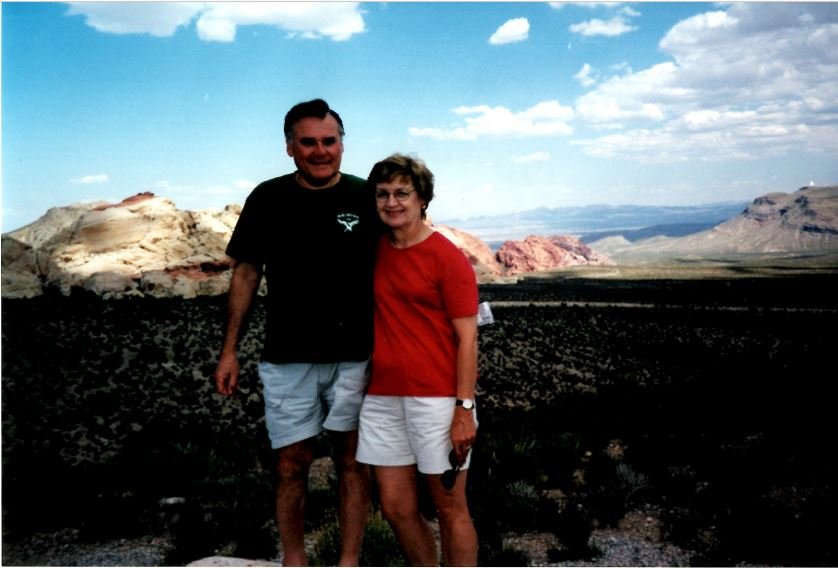
Missionaries (2010 to 2014)
After her sixth trip, Gary determined that he was called to be part of the adventure, and so they discussed their options, prayed, and made a life-changing decision. Under the sponsorship of Wycliffe Associates (WA), a missionary organization focused on assisting Bible translators around the world to bring Scripture to Bibleless people groups, they made a two-year commitment, leaving their home. At the time they did not realize that they would not permanently return until nearly five years later.
Based in the village of Holzhausen, Germany, they served the Eurasia area which included all of Europe, Eastern and Central Asia, the Middle East and North Africa. Gary assumed the role of Eurasia Regional Director. In addition to assisting Gary, Carolyn served as Regional Education Coordinator.
They loved Germany but found themselves traveling for more than a third of the year to projects and meetings in the many countries in their Eurasia area of responsibility. These countries ranged from Western nations such as Spain, France, Switzerland, and the rest of the European continent to Russia and its former Republics such as Tajikistan, Azerbaijan, Georgia, as well as Turkey, Armenia, Egypt, Israel and numerous other countries. These travels provided them with many adventures and enabled them to fulfill their mission and help others.
In late 2014 they decided to return to their home in the USA.
After returning, Carolyn and Gary continued their work for WA from the USA. There was minimal travel for the next year. Today, they continue in Consultant roles but have effectively reduced their involvement, transferring their WA responsibilities to others.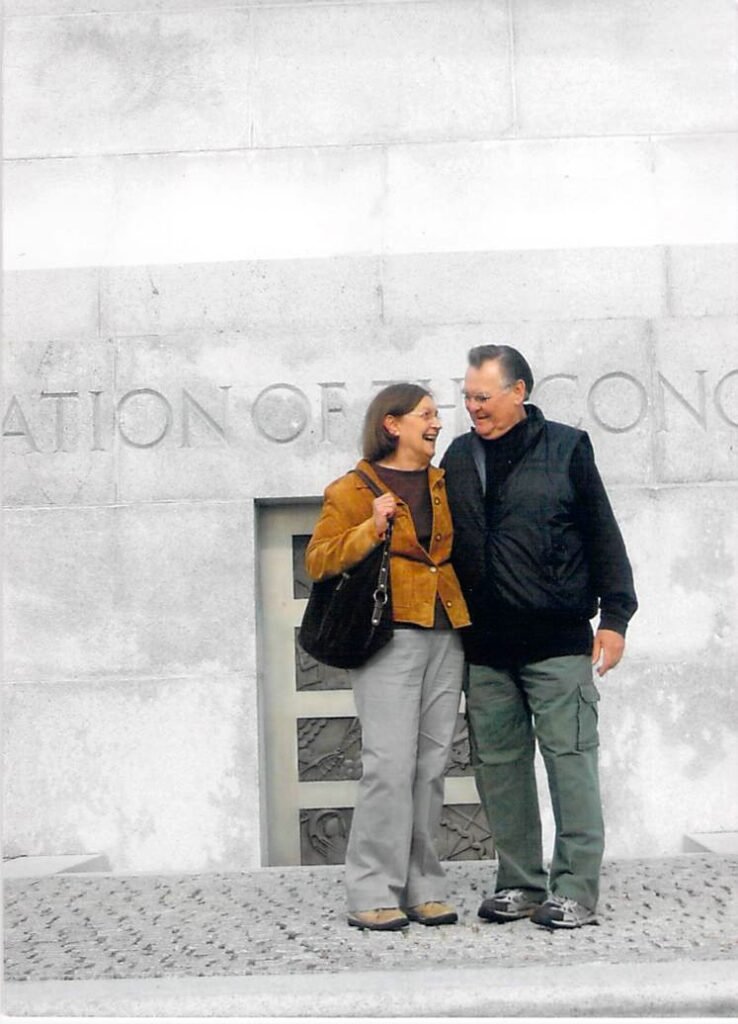
Gary continued doing legal work for Salem School and Children’s Trust, as well as several pro bono legal projects. Carolyn volunteers, writes and edits in different venues including for a radio station (Reveal FM, 97.1), and for English language on-line classes for national Bible translators.
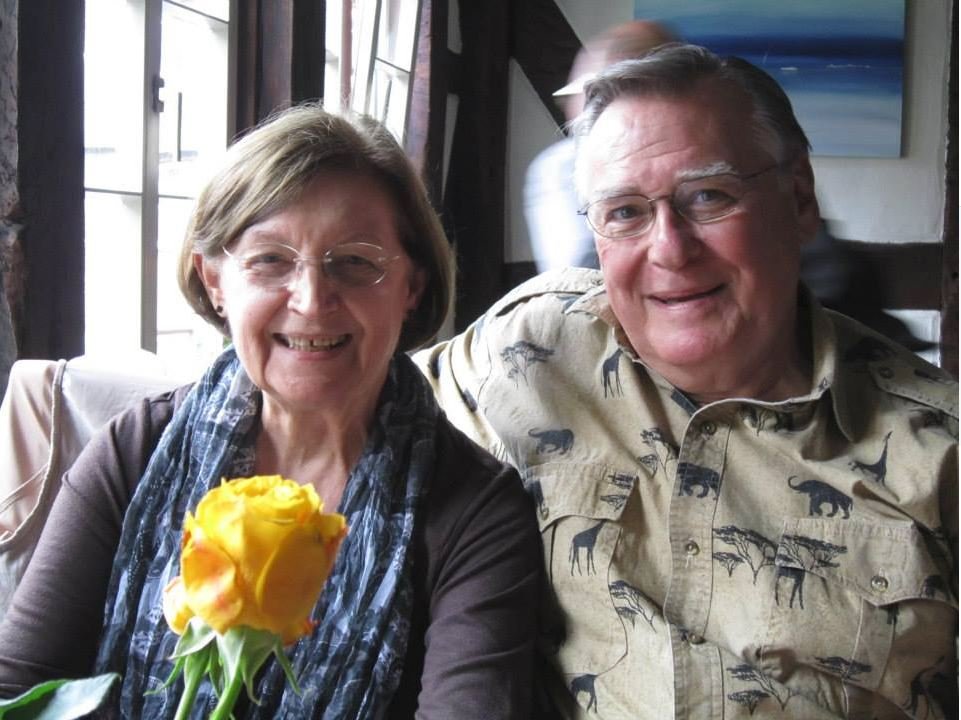
Update on the Harriger Children
Jason Carl was born March 1, 1972, in Baltimore. He received his BA in Music from West Virginia University. Jason went to California for a few years after graduation, then returned to Baltimore where he currently lives.
Rachel Rene was born a year and a day later, March 2, 1973, in Baltimore. She attended Elon University in North Carolina where she received a degree in Education. In 1998, Rachel married John Eanes, III (Trey), a Physical Therapist and Army Major. They have three children: Kaitlan Elizabeth (1998), Addison Rene (2000), and William Carl (2002). The Eanes currently live in Keller, Texas. Rachel is employed at a local school.
Karen Marie was born October 10, 1975, in Baltimore. She attended Syracuse University where she majored in finance, and Emory University Law School. In 2004, Karen married James Byron Currie, also an attorney. They have two children: Hayden (2008) and Joel (2010). Currently, the Curries live in Southlake, Texas, and Karen is a partner at Ernst and Young.
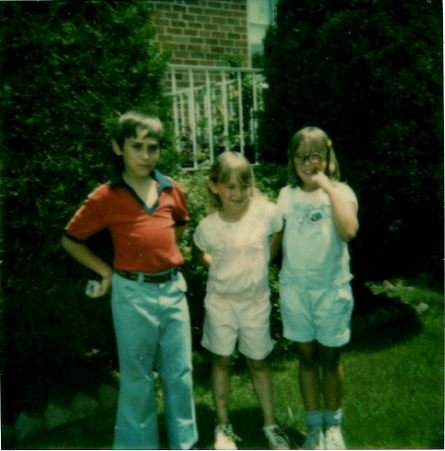
Anthony ‘Tony’ Stanley WASKIEWICZ Sr. (b: August 11, 1944)
Tony was born on August 11, 1944 at the time when the Waskiewicz family lived on a single floor of the Lombard Street townhouse. His crib was located in the same bedroom where his mother, father and two sisters slept. By 1950 he had his own room as the family purchased the home and converted former living space on the second floor into two bedrooms for him and his sister Carolyn.
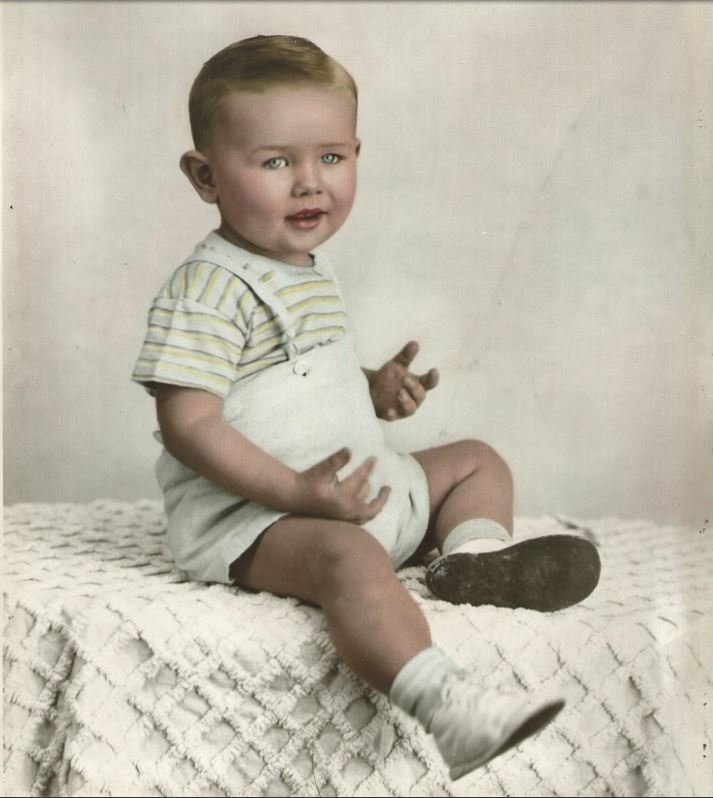
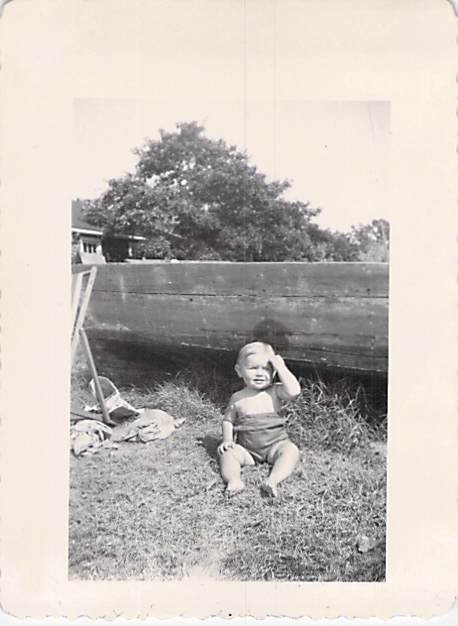
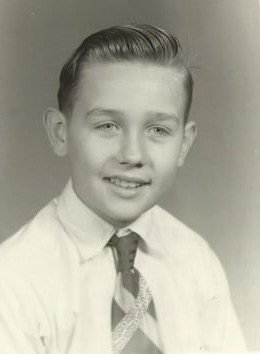
At the same time that Sophie started working at Meadow Gold Ice Cream in 1948, five-year-old Tony began attending kindergarten at the Catholic Community House on Broadway. He attended kindergarten for two years, a common practice at the time for smaller and younger children. CCH was located two blocks from his Lombard St. home. He was in the same graduating class as Monica Johns, who was Sophie’s cousin.
He started attending St. Michael’s School for Boys in 1950. As noted earlier in the family narrative, Tony had great memories of the annual summer carnival that would set up at St. Michaels. He also went to Friday night Bingo at the Church. Tony also fondly remembered the end-of-school year visits to Gwynn Oak Amusement Park, with its rides, penny arcade, picnic area, and goat and pony rides. To him, this was the greatest day of the year.
When he was younger he would visit Patterson Park with his sisters but by the time he was 9 or 10 years old he would go on his own. By 1953 the Patterson Park swimming pool opened and Tony went a few times. He was jealous that his sisters went more often.
Summer nights often were spent sitting on the front steps of the house and taking in the sights and sounds of the City at night, waiting for the temperature to drop enough that the family could finally sleep. Tony walked to the Recreation Center on the pier in Fells Point and entertained himself while his sisters played with the older kids.
Tony recalls spending time in the Lombard St. cellar, which had a dirt floor. He particularly enjoyed occasions when coal or wood scraps were delivered, using a shoot, thru the half/window at the front of the house. He built forts, conceived of other creative activities for the coal or wood, and quickly became dirty, typically from the coal dust.
Tony watched TV for the first time in 1951 at the next door neighbor’s house. They watched Friday night boxing. He also played in the streets with the other boys: curb ball, marbles, touch football, toy soldiers, “pitching pennies”, and swapping baseball cards.
Easter meant good food and lots of church – the family tried to visit all the Catholic churches in its “world” (that was about 216) on Holy Thursday. Christmas also involved trips to church and the grandparents. Tony recalled receiving a variety of Christmas gifts over the years: Lincoln Logs, Tinker Toys, skates, a red wagon, chemistry set and a “new” used bike. His Dad took him to Patterson Park and tried to teach him to ride the bike, but it wasn’t until the family moved to Overlea that Tony felt confident enough to ride the bike on a regular basis.
Given the freedom from parental oversight discussed earlier, there were things that occurred that the parents never learned about. For example, on occasion Tony would engage in the practice of using a straw to blow small objects at other people. This was known as a “pea-shooter” and the kids in the neighborhood would wage “pea shooter” wars. Buying snowballs was not allowed, so the parents did not know when the purchases were made. And they did not learn about the practice of selling ice cream brought home by Sophie from her job at Meadow Gold to kids in neighborhood.
For Tony, little league baseball was important. He played at the Highlandtown Exchange Club Little League. He started in the 8-year-old group at the lowest ability level. The teams only wore tee-shirts as their uniform. However complete box scores were maintained and many appeared in the morning edition of the Sun Paper the next day. At the end-of-season banquet the league officials distributed the players’ stats- listed highest to lowest. Tony had a batting average of .364 and his Dad seemed proud that it was higher than the batting average of a competitor friend’s son. The following year, Stanley bought Tony a GREAT glove to replace the cheap one, which Tony hated. During the year, the new glove was stolen while he was playing sandlot baseball in Patterson Park.
The new glove had cost $6 which was a lot of money in 1954 and Tony was petrified to tell his parents. Since Tony was also a stamp collector and his parents knew he wanted some collectibles, they gave him a choice after he admitted that the glove had been stolen – stamps or a replacement glove. He still has the glove.
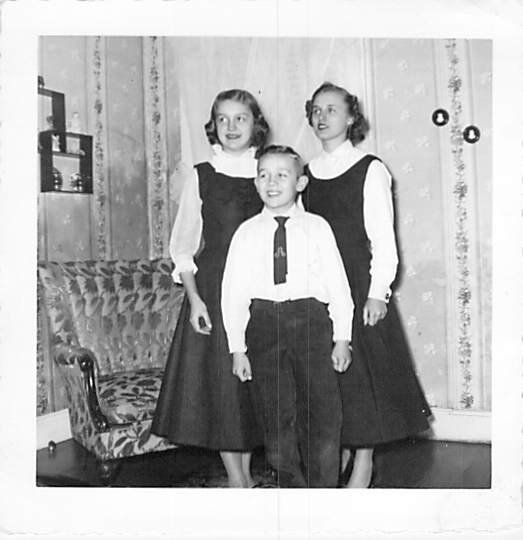
The Overlea Years
After moving to Overlea at age 10, Tony had a new-found sense of freedom. He could wander the area on his bike and he found neighborhood kids to play ball with on a vacant lot a block from the house. For the remainder of the 1955 baseball season he continued to take a bus back to Highlandtown (“Hollondtown”) to play in his regular baseball league. The next season and two more after that he played organized baseball for the Overlea Recreation Center, moving from the outfield to 1st base.
He started school in the fall at St. Michael’s (Overlea) which was a one-mile walk. Sometimes he would be chased by prowling dogs. He later rode his bike, until it was stolen.
Tony and his sisters enjoyed lots of freedom after school since both parents worked, but he had to be home by 5 pm. In summers he was free all day and he kept busy by going to the movies, playing with classmates and neighborhood kids and generally keeping out of trouble. By age 12 he was able to take the bus to the Oriole game by himself or with friends. He also joined Boy Scouts where he was able to hike and participate in a variety of activities.
In school Tony was generally a good student, but like some, he could get himself into trouble from time to time. In the 8th grade he was banned from staying at school at lunch time for kicking the girl’s 6th grade dodge-ball out of the school yard and onto the back of a moving pick-up truck. He did not tell his parents. The 6th through 8th grades at St. Michael’s School were co-ed and Tony enjoyed the change. He went to boy/girl parties where there was dancing. He attended his 8th grade “prom” with a popular 8th grader.
Calvert Hall High School
Tony graduated 8th grade in June, 1958, and was accepted at Calvert Hall, a demanding and expensive Catholic high school which had rigorous admission requirements. His parents supported the decision even though the Hall was very expensive and meant that they would have to work more hours to afford the tuition. Tony worked at Fauldrath’s Hardware Store that summer, working 5 and a half days per week making $.55/hr. He mixed paint chemicals, stocked shelves, did general clean-up and worked as a clerk when needed. According to Tony, it was the toughest job he ever had, making him realize that his parents were right about the importance of an education. He saved most of his weekly earning and used it to offset the tuition for his first semester at Calvert Hall, which was about $250.
Calvert Hall was then located downtown at Cathedral and Mulberry Streets, where Tony attended his first two years and then it moved to its current location in Towson, increasing Tony’s bus commute for his last two years. He would sometimes oversleep, miss his usual bus, and try to quietly slip into class unnoticed even though he was late in order to avoid detention. Tony did well at Calvert Hall, receiving good grades in most classes.
Teenage Years and Social Life
At home, Tony had a curfew, but his parents worked, were tired when they got home, and were not overly focused on what Tony did with his free time. When Tony’s friends encouraged him to stay out past curfew his parents would impose restrictions as punishment. His teen years were typical of most teens. He dated occasionally, made a few poor decisions, and hung out at local “hot rod” scene. As he and his friends grew older, there were fewer pick-up games at the Maryland School for the Blind since he and his friends (our “gang”) were getting jobs and working. Tony continued to work as a bagger/parcel pick-up clerk at “Two Guys,” a new local department store, where he made $1.05 per hour plus tips, which was good money for a teenager. This negated the need for his parents to give him spending money.
At the age of 16, in 1960, Tony was able to obtain his driver’s license and once he obtained it he delighted in borrowing his father’s 1953 Chevy, going to Catholic Youth Organization (CYO) dances regularly on Thursday, Elmwood dances on Friday and Perry Hall dances on Saturday. Tony and his friends spent time driving around and acting “cool,” occasionally drag racing his Dad’s car, pulling pranks, and occasionally getting into minor fights and drinking.
When Tony was in 8th grade it was not “cool” to notice or date 6th grade girls because they were too young and immature, but in his later teens the two-year age difference no longer mattered. At this age, dating a girl who was two year’s younger was no longer a source of social ridicule. One such girl, Barbara Copsey was 14 years old and lived one block east of the Waskiewicz home and Tony often passed her house on his way to his usual “hang out” area. He sometimes would talk with her, asking about some of her friends. She was easy to talk to and popular.
One day Barbara’s mother asked Tony to take her to the Friday night Elmwood dance, so that her father would not have to transport her. It was a two mile walk but Tony reluctantly agreed, and although they went together they spent very little time together that evening: she had her friends and he had his. At that dance Tony invited another girl to be his date at another event and she accepted, but then Tony learned that Barbara had left the dance without him. He found her three blocks away, lying on the grass crying because she had fallen and sprained her ankle. He helped her home and then invited her to the same event he invited the other girl. According to Tony, he fell in love during that walk.
Teenage Years and Social Life
In the weeks and months that followed Tony and Barbara spent time together, began “going steady,” and began making future plans together. They dated about once a week, attending parties, going to movies, and playing miniature golf. Since Barbara was not allowed to go out in cars, Tony would park the car a block away, pick her up, walk to the car, and they would take off.
Barbara often babysat her four younger siblings and she also had a part time job babysitting the son of Dave McNally, a famous Orioles pitcher in the 1960s. If Tony would visit while she was babysitting, he knew it was time to leave when Dave left the mound. Summer Sundays often were spent at the beach with many teen friends at ” Bay Shore”, “Porters”, “Rocky Point”, “Miami Beach, ” and occasionally at Loch Raven Reservoir.
College and Marriage
Tony began attending Loyola College in the fall of 1962. Like many college freshman, his first year was very difficult in terms of focus and grades. When he took his first accounting course, however, and decided that would be his major, his grades began to improve. Tony was not involved in campus life. He was more of a “commuter student” than a residential one, attending class and then leaving campus to hang out with Barbara and his friends.
He worked in the Sears Catalog department, which gave him enough money to enjoy himself. In those days, miniature golf cost $.30 per play, Gino’s hamburgers were famously advertised for $.15 hamburgers, accompanied by $.10 fries, and gasoline cost $.29 per gallon.
Tony’s friends were fairly typical of teenagers of that era, engaging in various antics and sometimes getting themselves into trouble. Tony tried to avoid activities that would get him in trouble with his parents. Most of his friends did not go to college, instead attending Mergenthaler (Mervo) Vocational Technical High School and moving into careers as such as machinists, electricians, draftsmen, and auto mechanics.
Tony was attending Loyola in November 1963, the day that President John F. Kennedy (JFK) was assassinated in Dallas. Classes were cancelled and he watched the events that transpired from home. He admired JFK and his youth, which were out of ordinary for most politicians of the time. Like most Americans, Tony spent the following days and weeks watching events related to Kennedy’s assassination transpire.
Tony and Barbara became engaged on December 24, 1963, during Tony’s sophomore year at Loyola. They decided to wait until Tony graduated to get married and picked June 11, 1966 as their wedding date.
Tony participated in Loyola’s Reserve Officer Training Command (ROTC) military training program, but discontinued after two years because the Vietnam War was escalating. Academically, his grades improved and he achieved the “Dean’s List” as a junior. He also obtained a job working for an accounting professor who had his own accounting firm. Barb was working at Union Trust after graduation from Infant of Prague High School in Baltimore.
By his senior year Tony was driving his father’s 1961 Chevy and would take Barb to work in the morning, work at his accounting job for a few hours, attend class, go back to work, and then pick Barb up at the end of the work day. On days when he had no classes scheduled he worked a full day, and would also work on Saturdays in order to get in his 40 hours. He maintained good grades throughout his senior year.
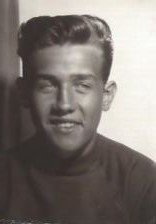
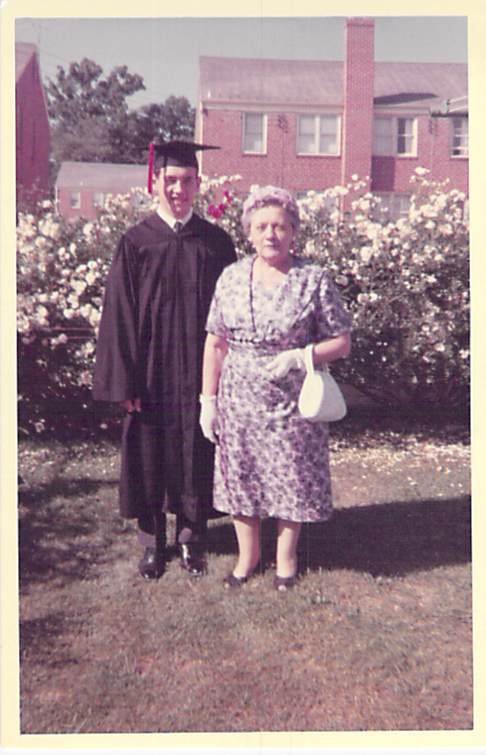
In March 1966 Tony was hired by Coopers & Lybrand, a large and well-known accounting firm. He planned to start on July 1, after his wedding and honeymoon. He and Barbara were saving for the wedding costs, honeymoon, and new furniture for their first apartment.
In 1966, Tony was facing the draft because of the Vietnam War. He admits to having an anti-draft sentiment because of the loss of freedom that the draft imposed. He was somewhat envious of those who were able to “beat the draft,” while he was unable to do so. The Vietnam War was escalating and young men were being drafted. On March 17, 1966, Tony decided to join the Army Reserves and joined the 818th Ordinance Unit, preferring to work in supply rather than combat operations.
Unfortunately, he was scheduled to attend a two-week summer camp starting on June 11, the planned wedding date. So after considerable scrambling to reserve the church and reception hall, the wedding was rescheduled to May 7, 1966. When grandmother Julianna Rykoski was informed of the change of date her reaction was: “Sophie, you don’t have to make excuses, it happens in the best of families”.
Tony acknowledges that his draft resentment of the early 1960s, his perspective that the military was incompetent and a waste of manpower and resources gave way after the war, to appreciation and admiration for those who served. These latter feelings continue to this day.
Family and Military
Tony and Barbara spent a week on the Pocono mountains for their honeymoon. Tony skipped classes but was not worried because his job was already assured, missing the important topic of “birth control” in one of his ethics classes (after all, Loyola was a Jesuit college).
Their children were born over the next seven years, from 1967 to 1973. The first child was expected in February of 1967, and Tony was awaiting his basic training orders, but they were delayed until January of 1967, which enabled the couple to save enough money to cover the period when Tony would only be receiving military compensation and Barbara would be tending to their first child. His orders arrived on January 25, 1967, but Barbara went into labor and delivered their first son, Anthony Jr., the next day, January 26, 1967. After much panic and stress, Tony was able to get the orders postponed for two months, which gave him time to stay home and assist with the newborn.
Tony attended basic training at Fort Bragg, N.C. starting in March 1967 and then completed his training at Ft. Lee, Virginia. He was trained on manual supply system methods that were obsolete even as he was being trained because of Army progress in automating its supply system. Tony was away from home for four months, earning $285 for his efforts over that timeframe. Tony and Barbara spent a few days at Rehoboth Beach in Delaware before diving into his work in order to restore the family’s depleted savings.
The year 1968 was a tumultuous year, as Martin Luther King was assassinated in April, triggering riots and looting across the U.S. Baltimore was no exception, with large areas being looted and burned. Only two months later, presidential candidate Robert F. Kennedy (RFK) was assassinated.
In the midst of these events, Tony and Barbara’s second son, Gregory Allen, was born on May 7, 1968, their second wedding anniversary. After the assassinations, Tony, like many Americans, felt that civilization was regressing, and there was little reason for hope and optimism. Tony supported RFK because he thought he would bring an end to the Vietnam War. When he was assassinated in June, Tony was attending an accounting training program at Drew University in New Jersey. Knowing that his Reserve Unit was likely to be called to assist with the rioting, Tony transferred to the National Guard Air Defense unit, which could not be deployed for riot assistance.
As the 818th was becoming computerized, Tony transferred to a unit whose mission was to provide air defense for Baltimore from an air attack from Hagerstown, Md. It was a Nike- Hercules missile unit that was soon declared obsolete and later disbanded. After completing his 6-year obligation, Tony was discharged as a Private First Class (PFC), the same rank he held when entering military service.
By the time that Tony and Barbara’s third son, Brian Michael, was born on October 30, 1970, many of the events of the 1960s had faded. As the Vietnam War neared its end, there was reason to be optimistic and hope that life would become normal again.
From “Big 8” to Private Practice
Tony became a Certified Public Accountant (CPA) in May 1969. Working at a “Big 8” accounting firm was an effective means of starting a career, but employees were required to work long hours and often were required to travel extensively. It was common for employees to work at these firms for a couple of years, make contacts with client firms, and leave the “Big 8” firm for a more stable career track. Tony left Coopers & Lybrand in January 1972, joining the Kirk Corporation, a Coopers & Lybrand client, as corporate controller. This change provided Tony with a much more relaxed work environment and little need to work extensive overtime.
Tony and his family traveled to central Florida in March, 1972, spending six weeks resolving various accounting issues and even uncovering theft activities. The family lived in a modern trailer located near a lake, only two miles from work, which enabled Tony to come home for lunch. The family explored Florida on weekends and enjoyed living on Tony’s expense account.
In 1974 The Kirk Corporation began reorganizing and outsourcing some operations. Tony viewed this as an opportunity to leave direct employment and to hire himself back as an independent contractor. Serving as an external accountant afforded him the opportunity to secure other outside accounts and gradually continue to grow his practice. The practice grew over time and in 1984 Tony moved his office from York Road to Timonium Road. He rented for 32 years, reflecting that in hindsight he should have bought the building.
Family, Homes, Vacations
The Waskiewicz’ bought their first home in Perry Hall for $23,700 in 1969. Trying to produce a daughter after three sons, Tony and Barbara’s fourth child, Eric Christopher was born on December 30, 1973. In August 1976, the family purchased a new Perry Hall home located three blocks from their first home, at 9221 Gardenia Rd.
As might be expected when raising four sons, the family was involved in many school and recreation council sporting activities including: football, basketball, baseball, soccer, wrestling, lacrosse, and cross country. Tony and Barb attended most events and Tony even coached a few seasons.
The family took annual vacations to Ocean City, Maryland and to Disney World in Orlando, Florida in “even numbered” years. The boys were transferred from Perry Hall Elementary School to Boys Latin School.
College Education
In 1985, Tony Jr. started attending Washington & Lee University. The family recognized that as the boys left for college family life would change. A year later Gregory left for Syracuse University and then transferred to Towson State University after two years, creating a financial windfall for the family. Brian, interested in becoming a commercial airline pilot, attended Embry Riddle Aeronautical University in Daytona Beach, Fl. Two years later Eric went to Embry Riddle, transferring to Towson State University after two years, creating another financial windfall for the family. The family enjoyed many trips to Virginia, Syracuse and Daytona to attend football and baseball games and participate in some great fraternity parties.
The Waskiewicz sons graduated from college, started their own families, and, to the delight of Tony and Barbara, began having children. The oldest son relocated to St. Louis in 2010, but the families have visited back and forth many times. The other sons continue to live in the Maryland area and visit with their parents often.
Travel and Retirement
By 1991, as they celebrated their 25th wedding anniversary and with most of the college expenses out of the way, Tony and Barbara began to travel extensively. By 2004 they had traveled to all seven continents, learning to love travel. They prepared a ” bucket list” and proceeded to check off most of the items. They generally traveled alone but occasionally went with friends or with folks they had met on previous trips.
They went on many cruises which afforded opportunity to stop at many locations, but limited visits to brief, day-long “excursions.” If they liked a particular location, they would later travel back to it on their own.
In the midst of traveling, current events continued to occur. On September 11, 2001, terrorists flew two aircraft into the World Trade Center in New York, causing the twin towers to collapse and killing thousands. Tony’s son Eric, called and told him the news. Since son Brian was a commercial pilot flying commuter jets for United Express, Tony immediately checked Brian’s flight schedule. Tony learned that Brian was scheduled to fly from Dulles to Philadelphia and calculated that he could not have made it to New York by the time of the attack , even if his aircraft had been hijacked.
Tony and the family anxiously watched events unfold. When news reports indicated that a hijacked aircraft was somewhere over Pennsylvania, the anxiety increased. Brian did call when he safely reached Philadelphia. Brian was scheduled to start a vacation to Europe that same day but had to remain with his aircraft in Philadelphia since he was its captain. He flew the aircraft, without passengers, back to Dulles several days later and then began his vacation. Several flight attendants working Brian’s flights quit as soon as they safely landed in Philadelphia on 9/11. The family learned later that the aircraft that hit the Pentagon was only four aircraft ahead of Brian’s in the takeoff cue at Dulles International Airport.
By 2015 Tony and Barbara had visited over 100 foreign lands, including 77 foreign countries. After touring Russia in 2013, they cut back on foreign travel and began visiting the 50 U.S. states.
Their most memorable trips were three African safaris and trips to Israel, Jordan and Egypt. Other exotic favorites included: Tibet, Tasmania, Galapagos, Bora- Bora, and the Amazon River.
2015 to Present
After many years of self-employment, Tony and Barb sold the accounting practice on June 1, 2015, to a mid-sized professional group located in Towson, Maryland. Tony remained as part-time consultant through April, 2016. After their January 2016 “exploration”, they intend to spend the next few winters as “snow-birds”, temporarily living in various areas in Florida, while maintaining their Perry hall, Maryland, home base.
Update on the Waskiewicz Children
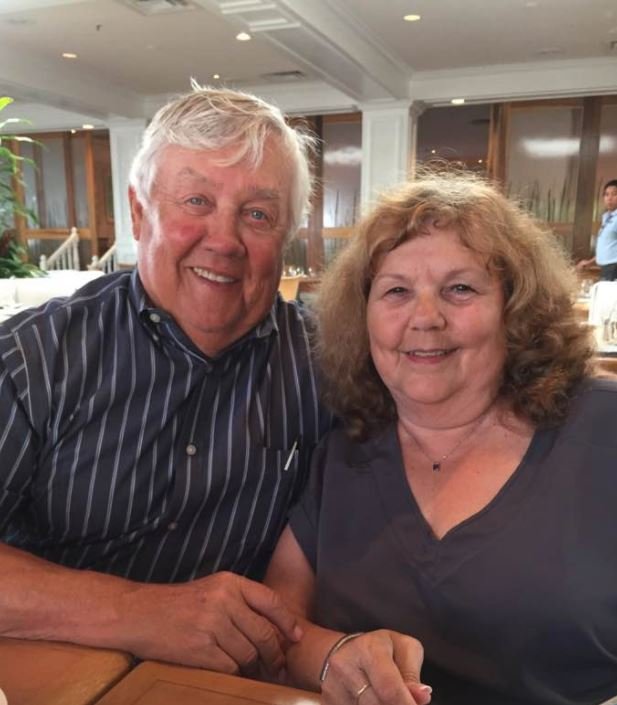
Tony and Barbara proudly bore four sons: Anthony Jr., Gregory, Brian and Eric. They all graduated from college and have given Tony and Barbara six grandchildren. They see their sons regularly and enjoy many family celebrations. With good health throughout, the “Waskiewicz 16” has been more than fortunate.
Anthony Stanley, Jr. , born January 26,1967, majored in Business Admin at Washington & Lee University. He received his Master of Business Administration degree from Loyola University and currently works as Chief Investment Advisor for Mercy Medical Group in St. Louis, Missouri. In 1995 he married Christine Morgan. They have two daughters, Darcy Elizabeth (1998), a freshman at Furman University in South Carolina, and Devon Victoria (1999).
Gregory Allen, born May 7,1968, graduated from Towson University and works as a Regional Sales Manager. In 1998 he married Theresa Fort. They have two children, Ryan Alexander (1999) and Rachel Lauren ( 2003).
Brian Michael, born October 30, 1971, graduated with a Bachelor of Science in Aeronautical Science from Embry-Riddle University in Daytona Beach, Florida. He received a Master’s degree in cyber security from Towson University and currently works in that field. In 2013 he married Jennifer Frame . They have two children, Quentin Bennett (2013) and Greta Zofia (2016).
Eric Christopher, born December 30, 1973, graduated from Towson University and later earned a Master’s degree from St. Joseph’s University in the field of Organizational Development and Leadership. He currently works as a Management Consultant. In 2011 he married Marissa Bowers .